Wet Basement Fixes

After-flood guide

What to Do After Basement Floods

After a basement floods, the first goal is safety. Electricity, contaminated water, gas, carbon monoxide, wet materials, and hidden mold risk come before repair quotes or cleanup shortcuts.

How to use this page

  • Start with the symptom or decision closest to your situation.
  • Compare repair options before choosing a contractor quote.
  • Check cost assumptions, safety boundaries, and related guides.
  • Request an inspection when water, odor, humidity, insulation, or wood concerns are active.

Quick answer

Start with safety, timing, and the first wet point

After a basement floods, stay out until it is safe to enter. Do not step into standing water near electrical equipment. If power must be turned off and you cannot reach the switch from a dry location, CDC guidance recommends calling an electrician. If you smell gas or suspect a leak, leave immediately and contact the proper utility or emergency authority.

Once the area is safe, document the damage before major cleanup, contact insurance if applicable, remove water and wet materials according to safety guidance, dry the area quickly, and identify why the basement flooded. EPA mold guidance emphasizes moisture control, prompt cleanup, and fixing the water problem.

Prevention comes after safety and documentation. A flooded basement may need sump pump replacement, battery backup, interior drainage, exterior drainage correction, discharge rerouting, crack repair, window-well drainage, or cleanup beyond waterproofing. The right path depends on how water entered and what failed during the event.

Last reviewed: August 2, 2026
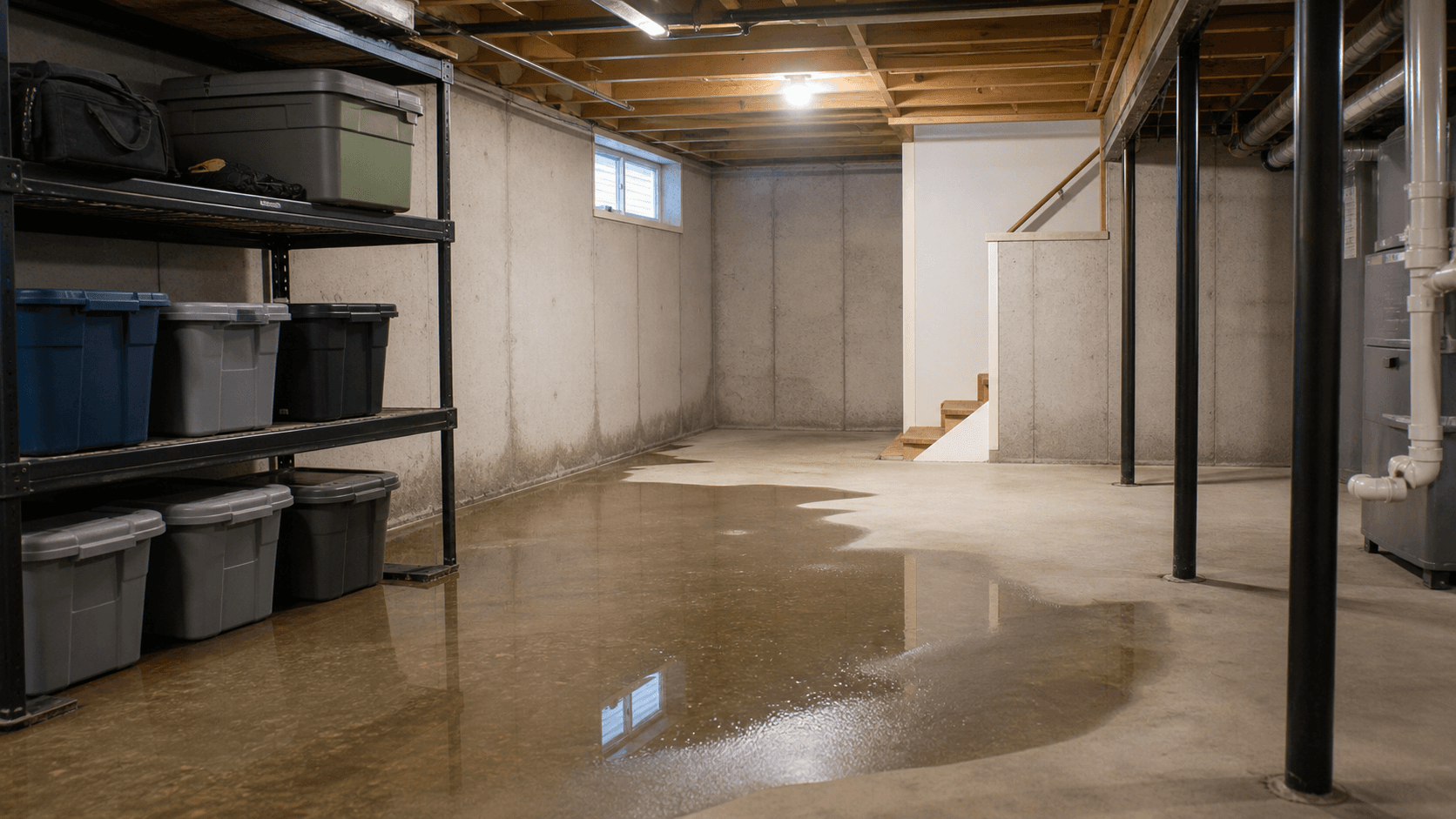
Standing water in a basement around stored household items
Standing water can involve electrical, contamination, cleanup, and indoor-air concerns. Safety comes before source diagnosis.

Clue table

What common observations may mean

ObservationPossible meaningUseful next step

Standing water near outlets or panels

Electrical shock risk may be present.

Do not enter; have power addressed from a dry safe location or by an electrician.

Sewage odor or dirty floodwater

Water may be contaminated and cleanup may require protective equipment or specialists.

Avoid contact and follow local health or cleanup guidance.

Pump did not run

Power outage, failed pump, stuck float, bad outlet, clogged discharge, or missing backup may be involved.

Document pump behavior and review sump replacement and backup options.

Water entered from one wall or window

Exterior drainage, wall crack, window well, or wall-side pressure may be the path.

Photograph the first entry point and inspect outside when conditions are safe.

Finished materials are wet

Drywall, insulation, flooring, trim, and cabinets may hold moisture.

Ask cleanup professionals what can be dried, cleaned, or removed.

Field guide

How to think through basement water

A basement water guide should begin with observation, not demolition. The safest first step is to identify the first wet point, the timing, the weather conditions, and the surrounding clues before anyone starts opening walls, cutting concrete, or buying a repair product. A small note made during the storm can prevent a much more expensive guess later.

The most useful pattern is repeatability. Water that appears in the same wall crack after every hard rain points to a different repair conversation than water that appears once after a power outage, under a water heater, near a window well, or across a whole floor. The more repeatable the pattern, the easier it is to compare repair options.

Exterior clues belong in every guide because basement water often starts outside. Roof water, short downspouts, clogged gutters, low soil beside the foundation, settled patios, window wells, and discharge lines can all send water toward the same basement wall. NC State Extension guidance emphasizes clean, maintained gutters and downspout water carried away from the home.

Professional boundaries matter. Homeowners can document water, move dry belongings, check visible drainage clues, and run a sump test from a safe dry location. They should not stand in water near electrical equipment, handle contaminated water without protection, diagnose structural movement from photos alone, or treat mold and health questions as simple waterproofing decisions.

Step-by-step

Work through the guide in order

1

Stay out until basic hazards are controlled

Floodwater and wet electrical systems are a bad combination. CDC guidance warns against entering standing water to reach power controls and recommends professional electrical help when shutoff cannot be reached from a dry location.

2

Use safe light and ventilation

Return during daylight if possible and use battery-powered flashlights rather than candles or fuel-burning lights. If the home has been closed for days, CDC guidance recommends opening doors and windows briefly to air it out before staying inside for long.

3

Prevent carbon monoxide risk

Never run gasoline-powered pumps, generators, pressure washers, or engines inside a basement, garage, porch, or enclosed area. CDC guidance says these should be used outdoors and away from doors, windows, and vents.

4

Document before removing evidence

Take photos and video of water depth, damaged materials, sump basin, pump status, discharge route, wall stains, floor cracks, window wells, stored items, and exterior drainage. Documentation helps insurance conversations and repair estimates.

5

Remove water and wet materials safely

The right cleanup depends on water source and contamination. Absorbent materials that cannot be dried and cleaned may need removal. EPA and CDC both emphasize moisture control and prompt cleanup to reduce mold risk.

6

Dry, dehumidify, and monitor

After water removal, drying is still work. Use safe ventilation, dehumidification, and professional drying help when needed. Monitor odor, humidity, wall cavities, flooring, and hidden areas instead of assuming the basement is dry because the floor looks clear.

7

Find why the flood happened

Once safe, separate sump failure, power loss, exterior runoff, window-well flooding, wall seepage, floor pressure, plumbing, sewer backup, and discharge problems. Prevention depends on the cause.

Safety and evidence

Protect people first, then protect the record

Safety boundaries

  • Do not enter standing water if electrical equipment, outlets, cords, or panels may be involved.
  • Do not use wet electrical devices or turn power back on until the system is safe.
  • Do not run gas-powered pumps or generators indoors or near openings.
  • Do not assume floodwater is clean; protect against sewage, chemicals, and germs.
  • Do not turn on HVAC equipment that was flooded until it has been checked by a qualified professional.

What to document

  • Water depth, affected rooms, damaged materials, and stored belongings.
  • Sump pump basin, float, outlet, backup battery, alarm, and discharge line.
  • Exterior downspouts, gutters, grading, window wells, and discharge termination.
  • Any odor, sewage sign, gas smell, electrical concern, or structural damage.
  • Cleanup company notes, insurance claim information, repair estimates, and receipts.

Next-step planning

Turn observations into the right kind of action

After the first observation pass, sort the problem into one of four buckets: urgent safety issue, cleanup and drying issue, diagnosis issue, or repair planning issue. A flooded basement with electrical risk belongs in the first bucket. Wet drywall and carpet belong in cleanup and drying. A repeating wet line after rain belongs in diagnosis. Comparing interior drainage, exterior waterproofing, sump replacement, or crack repair belongs in repair planning.

The order matters because basement water projects can get expensive when steps are skipped. If wet materials remain, a waterproofing estimate may not address odor or indoor-air concerns. If the water source is not identified, a contractor may price a system that manages symptoms but misses exterior water. If discharge is unclear, a new pump or drain can send water right back toward the foundation.

A useful guide note becomes a better estimate when it includes location, timing, weather, water depth, first wet point, drying time, exterior conditions, sump behavior, and what changed after the last repair or storm. These details help separate a maintenance issue from a system design issue.

For homeowners comparing options, the next step should be proportional to risk. A small damp patch that appears once may justify monitoring and exterior maintenance. A repeat leak near finished walls, a failed pump, or standing water after storms should move toward inspection. Electrical concerns, sewage, gas odor, structural movement, or contaminated water should skip routine quote shopping and move directly to the appropriate specialist or emergency help.

Before the estimate

Make the inspection easier to compare later

Before an inspection, clear safe access to the wet wall, sump basin, discharge line, exterior wall, and any window well involved. Do not move heavy items through water or disturb materials that may be contaminated. The goal is to let the estimator see the evidence without creating a new safety problem.

During the inspection, ask the contractor to describe the repair in plain sequence: where water starts, where it enters, where the system collects it, where it discharges, what happens during power loss, and what maintenance the homeowner must perform. A clear sequence is often easier to trust than a polished sales label.

After the inspection, compare scopes line by line. One estimate may be only a pump replacement. Another may include perimeter drainage, a basin, battery backup, discharge rerouting, concrete repair, and finished-material removal. Those are not the same job. The guide notes should help you compare what each proposal is actually solving.

If the basement will be finished later, ask for a higher standard of proof. That can mean storm testing, humidity monitoring, backup pump planning, alarms, better discharge, and written exclusions for materials behind walls. Finishing over uncertainty usually costs more than pausing to verify the water path.

Estimate prep

Questions to ask before choosing a repair

  • What caused the flood: pump failure, power loss, drainage overload, exterior water, wall seepage, floor pressure, plumbing, or sewer backup?
  • What must happen before waterproofing work begins: cleanup, drying, electrical review, mold remediation, or structural review?
  • Will the proposed system handle the same storm scenario that caused this flood?
  • Is backup power, an alarm, a secondary pump, or discharge correction included?
  • What water damage, finished materials, cleanup, and restoration are excluded from the waterproofing estimate?

Local notes

Raleigh, Durham, and Fayetteville considerations

Raleigh homeowners should connect guide observations to lot drainage, roof-water discharge, finished basement use, permit questions, and whether a sump or discharge line needs electrical or plumbing coordination.

Durham guidance should stay property-specific until the city pages are expanded. Older additions, tight lots, finished spaces, and exterior access limits can matter more than broad city assumptions.

Fayetteville homeowners should put storm readiness high on the list when a basement has repeated rain-related water. Pump backup, alarms, discharge location, and cleanup exclusions deserve early attention.

For any local estimate, ask the contractor to describe what happens during a heavy rain, where water is expected to move, what part of the system needs maintenance, and what is excluded if water returns.

Avoid these

Common mistakes that make the next estimate weaker

Entering water before electrical hazards are controlled.
Running a generator or gas-powered pump inside or too close to the home.
Throwing away or cleaning everything before photos and insurance documentation.
Replacing a sump pump without checking discharge, backup, and why the pump failed.
Rebuilding finished walls before the basement has dried and the water source has been addressed.

After the first step

Monitor the next rain before closing the case

After the first cleanup, repair, or maintenance step, monitor the basement through at least one meaningful rain. Check the original wet point, the sump basin, the discharge location, the outside wall, the humidity level, and any finished materials that were close to the water. A basement can look dry on the surface while damp materials or hidden wall cavities still need attention.

Keep a simple log for the next few storms: date, rain intensity, first wet point, pump activity, discharge behavior, odor, humidity, and whether water returned. This log helps decide whether a small maintenance fix worked, whether a larger drainage system is justified, or whether a prior repair needs follow-up under warranty. It also gives every estimator the same timeline, which makes later recommendations easier to compare.

Related pages

Where to go next

FAQs

Common guide questions

What is the first thing to do after a basement floods?

Stay safe. Do not enter standing water near electrical equipment. If power must be turned off and cannot be reached from a dry location, call an electrician.

Should I call insurance before cleanup?

If insurance may be involved, document damage and contact the insurer early. Do not delay urgent safety actions, but photos and receipts can matter.

How fast should a flooded basement be dried?

As quickly as safely possible. EPA mold guidance emphasizes moisture control and fixing the water problem. Wet absorbent materials may need removal if they cannot be dried and cleaned.

Does a flooded basement always need waterproofing?

No. Some floods come from plumbing, sewer backup, appliance leaks, or one-time events. Repeated rain-related flooding often needs sump, drainage, discharge, or exterior water-management review.

Sources

References used for this guide

This guide uses public safety, mold, moisture, and drainage references. It is educational and does not replace a local inspection, emergency response, electrician, plumber, mold professional, structural professional, or insurance guidance when those are needed.