Wet Basement Fixes

Basement flooding

Basement Flooding

Basement flooding needs a safety-first response before a repair conversation. Once the area is safe and dry, the next question is why water entered and which prevention system fits the source.

Direct answer

What this symptom usually means

  • If the basement is actively flooded, safety comes before waterproofing. Stay out of water near electricity, appliances, HVAC equipment, fuel, sewage, or unknown contamination. Turn power off only from a dry, safe location or call qualified help.
  • After the immediate risk is controlled, document the water, remove it safely, dry wet materials quickly, and separate groundwater intrusion from plumbing, sewer, appliance, or stormwater issues.
  • Prevention may involve grading, downspouts, exterior drainage, interior drains, sump pump replacement, backup power, crack repair, window-well drainage, or a combination.

This page is educational. It does not diagnose structural, mold, plumbing, electrical, insurance, or health issues remotely.

Visible clue

Start by documenting the exact pattern.

A basement water symptom is most useful before it has been cleaned, dried, painted over, or hidden by finished materials.

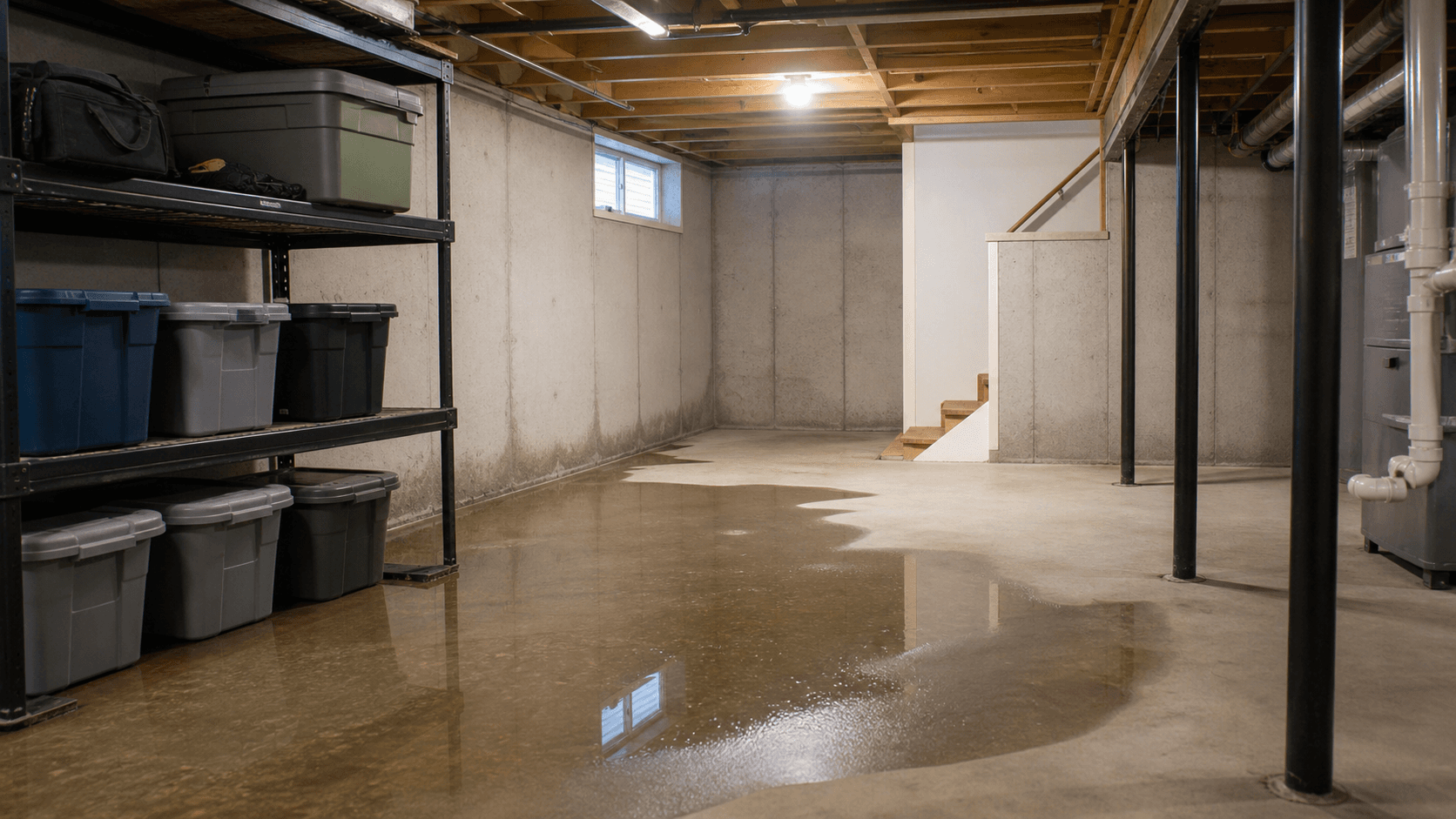
Shallow standing water in a clean basement storage area after rain
Even shallow basement flooding can affect stored items, finishes, appliances, and electrical safety. Prevention planning starts after the immediate water is handled safely.

If the basement is actively flooded, safety comes before waterproofing. Stay out of water near electricity, appliances, HVAC equipment, fuel, sewage, or unknown contamination. Turn power off only from a dry, safe location or call qualified help.

After the immediate risk is controlled, document the water, remove it safely, dry wet materials quickly, and separate groundwater intrusion from plumbing, sewer, appliance, or stormwater issues.

Prevention may involve grading, downspouts, exterior drainage, interior drains, sump pump replacement, backup power, crack repair, window-well drainage, or a combination.

A flooded basement can erase the first entry point. Look for water lines, debris paths, the highest wet mark, sump basin overflow, window-well staining, floor-drain backup, wall stains, and exterior pooling after the water recedes.

Likely causes

What can cause this basement water problem?

Most wet-basement symptoms have more than one possible cause. A good repair recommendation should explain which cause is most likely and what evidence supports it.

1

Sump pump failure during a storm

A failed pump, power outage, blocked discharge, or overwhelmed basin can allow water to spread quickly across the floor.

2

Perimeter seepage becomes widespread

Water entering at several wall-floor joints can turn from seepage into flooding when rain is long or heavy enough.

3

Window wells or exterior openings overflow

A clogged window-well drain, missing cover, or poor grading can send water through a basement window or below-grade opening.

4

Surface water collects against the foundation

Gutters, downspouts, grading, patios, and low spots can route large volumes of water toward the basement.

5

Plumbing or sewer backup is mistaken for waterproofing seepage

Not every flood is groundwater. Floor drains, sewage, appliances, and plumbing failures require different professionals and safety steps.

Urgency

When to act quickly and when to monitor.

Urgency depends on safety risk, recurrence, water volume, finished materials, electrical exposure, and whether the symptom is changing.

Level
Signs
Suggested action
Immediate danger
Water is near electricity, sewage, fuel, gas, or structural movement.
Stay out and call qualified help.
Cleanup urgency
Wet carpet, drywall, insulation, boxes, or furniture are present.
Dry or remove materials quickly and safely.
Prevention need
Flooding has happened more than once.
Request a drainage and sump system review.
Documentation
You may need insurance or contractor records.
Photograph damage, water lines, and likely entry points.

Avoid shortcuts

What not to do before the source is clear.

The instinct after a flood is to start pumping and clearing immediately. Safety comes before speed: standing water in a basement can be energised by submerged outlets, appliances, or wiring, and floodwater that has contacted sewage or fuel is a health matter rather than a cleaning one. Do not enter standing water until power to the area is confirmed off by someone competent to confirm it, and treat contaminated water as requiring professional cleanup.

The second instinct — clean everything before anyone sees it — costs money. Photographs and video taken before cleanup are what an insurer, a contractor, and you yourself will rely on later to establish depth, extent, and origin. Ten minutes of documentation while the evidence is still there is worth more than any part of the cleanup.

Walking into water near electrical hazards.

Assuming every flood is a waterproofing problem rather than checking plumbing or sewer sources.

Drying the floor but leaving wet walls or stored items.

Replacing a pump without reviewing drainage and discharge.

Waiting for repeated floods before planning prevention.

Repair paths

Which waterproofing or moisture-control options may apply?

The right option should match the source. These related pages help you compare what each method does, what it does not do, and what questions to ask before approving work.

Local context

Raleigh, Durham, and Fayetteville estimates should still come back to the individual house.

What matters locally is soil, drainage, and how the house sits on its lot — not the city on the estimate.

Raleigh and Durham pages should ask about finished basements, sump backup, and exterior drainage constraints.

Fayetteville pages should give extra attention to storm readiness, discharge routing, and pump reliability where supported by local research.

Any local flood-related claims should be sourced and should not replace emergency, insurance, or restoration guidance.

Decision guide

How to think through this problem before comparing quotes.

Moving from what you can see to what a contractor should be asked — for this symptom specifically.

Flooding is an event rather than a condition, and the order of operations matters more here than on any other page: safety, then documentation, then cause. The cause investigation is what stops it happening twice, but it comes third.

1Settle the safety questions first

Electricity, contamination, and structure, in that order. Do not enter standing water where outlets, appliances, or a furnace may be submerged until the power is confirmed off. Treat water that may contain sewage or fuel as a job for professionals with protective equipment. If walls have moved, or if the flooding followed a structural event, keep out until it has been assessed. The CDC's guidance on re-entering a flooded home is the right reference here, not this page.

2Establish which category of water it was

Surface water entering at a window well or door, groundwater rising through the slab and joint, a plumbing failure inside the house, and a sewer backup are four different events with four different repairs and four very different insurance treatments. The clues are timing relative to rainfall, where the water first appeared, whether it was clean or foul, and whether neighbours were affected too.

3Document before you clear

Photograph the high-water line on the walls, each affected room, damaged contents, and the areas where water appeared to enter. Video with commentary is quicker than notes. Record the date, the rainfall, and how long the water stayed. Do this before removing anything — once carpet and boxes are out, the depth and extent become impossible to prove.

4Decide whether this is an event or a pattern

A basement that flooded once in a record storm and a basement that floods most years need different responses. Ask neighbours whether they flooded, check whether the property has flooded before, and find out whether anything changed recently — new construction uphill, a regraded garden, a blocked municipal drain, an altered downspout. A one-off in an exceptional storm may not justify a full drainage system; a pattern almost certainly does.

5Match the repair to the failure that actually happened

The most common expensive mistake after a flood is buying the repair that is being sold rather than the one that fits. Water that came in over a window well is not fixed by a perimeter drain. A sewer backup is not fixed by exterior waterproofing; it is addressed by a backwater valve. A pump that failed in a power cut is not fixed by a bigger pump. Insist that any proposal names the specific failure it prevents.

Go deeper: find the source · inspection checklist · is the quote fair?

Estimate prep

Questions to ask before approving work.

Good waterproofing estimates are specific. They identify the source, method, discharge path, affected materials, warranty limits, and exclusions.

What source caused the flood: groundwater, surface water, sump failure, plumbing, sewer, or window well?

What is the prevention plan for the next storm?

Does the quote include backup pump or battery backup?

Where will water discharge?

What cleanup, electrical, plumbing, or finish repairs are excluded?

How will the system be maintained and tested?

Request an estimate

Common questions

Basement Flooding FAQs

These short answers help you decide what to document, which related page to read next, and when to bring in qualified help.

What should I do first after basement flooding?

Stay safe around electricity and contamination, document the water, remove it safely, and dry wet materials quickly once the area is safe.

Is basement flooding always caused by rain?

No. It can come from groundwater, surface water, sump failure, plumbing leaks, sewer backup, appliance failure, or window-well overflow.

Will a sump pump prevent all flooding?

No. A sump pump is one part of a system. Collection drains, discharge routing, backup power, and exterior water management may also matter.

Should I call waterproofing or restoration first?

If water is active, contaminated, or affecting materials, cleanup/restoration and safety may come first. Waterproofing prevention is usually planned after the immediate event is under control.

Sources

Sources and review notes

Public health and home-maintenance references used for the safety boundaries on this page.