Wet Basement Fixes

Raleigh basement waterproofing

Basement Waterproofing in Raleigh, NC

Raleigh homeowners dealing with basement water need to separate roof water, grading, sump reliability, wall seepage, floor pressure, and public-stormwater questions before choosing a waterproofing method.

Wake County and the Triangle

Before requesting local help

  • Document the first wet point and storm timing.
  • Check outside drainage near the same wall.
  • Review sump pump behavior and discharge location.
  • Ask what local drainage or permit questions may apply.

Last reviewed: August 2, 2026

Local answer

What Raleigh homeowners should check first

Basement waterproofing in Raleigh should start with the water path. If water appears after rain, the first questions are where it starts inside, what is happening outside the same wall, whether the sump system is moving water away, and whether grading, gutters, downspouts, patios, or nearby hard surfaces are adding water to the foundation.

Interior waterproofing, exterior waterproofing, French drains, sump pumps, crack repair, and exterior water management can all be appropriate in Raleigh, but they solve different problems. Interior drains manage water that reaches the basement perimeter. Exterior work addresses the outside of the wall. Sump pumps remove collected water. Crack repair seals a specific path. Downspout and grading work reduce the water load before it becomes a basement problem.

Raleigh also has public stormwater programs and residential stormwater permitting guidance, but those do not automatically apply to every wet basement. The City of Raleigh drainage assistance program focuses on severe flooding or erosion tied to runoff from public streets or public property, and it specifically excludes issues such as roof/gutter problems and drainage from private landscaping or yard grading. That distinction matters when a homeowner is deciding whether to call a waterproofing contractor, review private-property drainage, or ask the city a stormwater question.

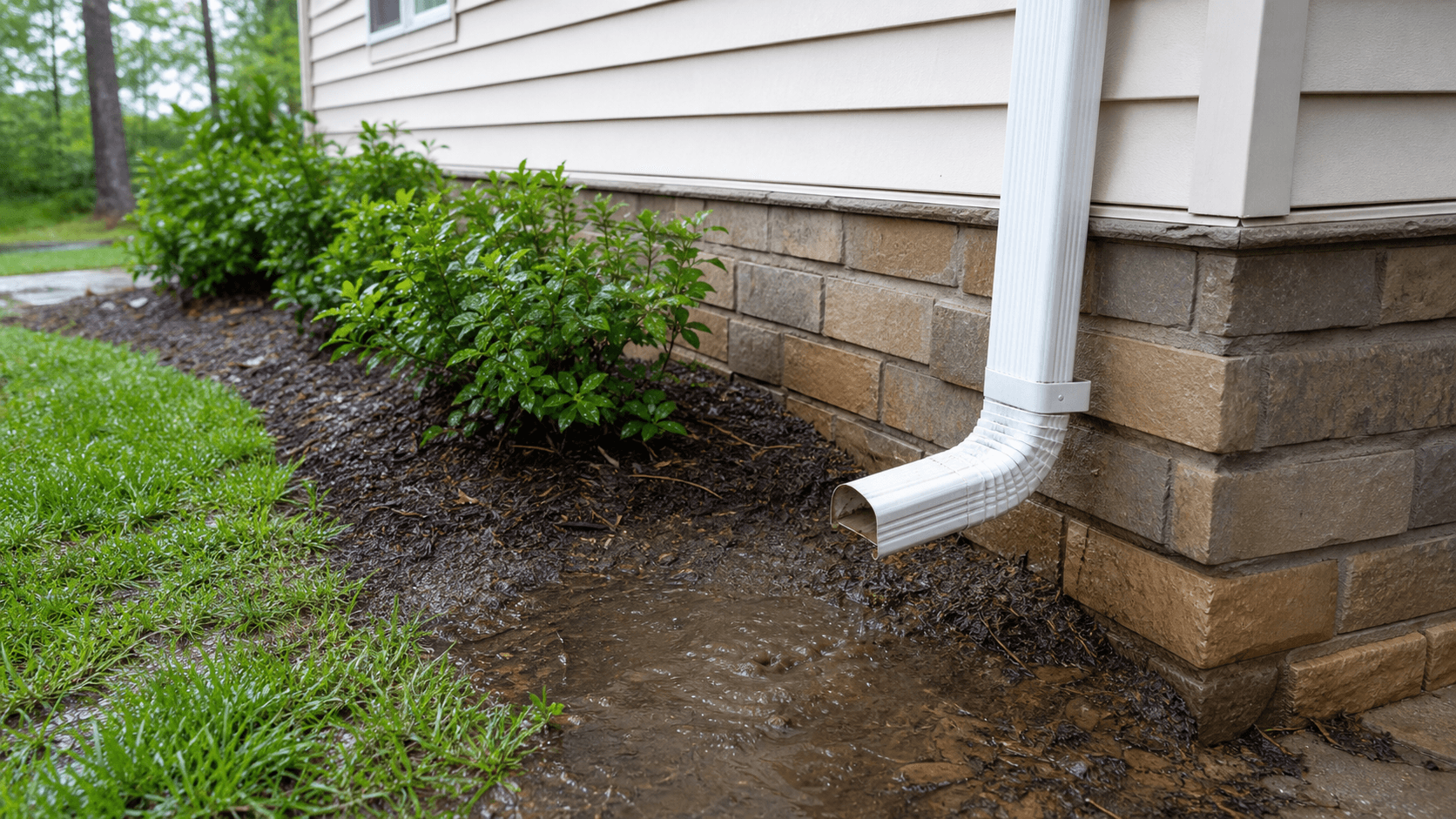
Rainwater pooling beside a foundation near a downspout after rain
In Raleigh, start with the same-wall exterior clues: gutter overflow, downspout length, grading, patios, drains, and where sump discharge ends.

Local context

Raleigh drainage and waterproofing context

Raleigh's drainage assistance information is useful because it separates public-runoff issues from private-property water management. If water is entering the basement because of roof water, short downspouts, negative grading, or private landscaping, the solution is usually not a city drainage assistance project. It is a private-property diagnostic and repair question.

Raleigh residential stormwater permitting guidance also reminds homeowners that changes to impervious surface, floodplain conditions, riparian buffers, drainage easements, and related site conditions can affect residential projects. A basement contractor may not be the only person involved when a repair changes exterior drainage, discharge routing, hardscape, or site grading.

NC State Extension home-maintenance guidance gives a practical first step for Raleigh homes: water from the roof should drain away from foundation walls, and gutters and downspouts should be kept open and in good repair. That does not replace waterproofing when water is already entering, but it can reduce the water load that makes leaks repeat.

Raleigh should be treated as the site's primary Triangle hub. Durham and nearby communities may share contractor coverage, but Raleigh pages should not make claims about offices, crews, reviews, or response times unless those details are real and documented.

How to think locally

City name is not enough: match the water path

Local waterproofing decisions work best when the inside symptom is matched to outside water conditions. The first wet point, storm timing, sump behavior, discharge route, downspout layout, grading, nearby hard surfaces, window wells, and finished materials all matter more than the city name by itself.

Local drainage rules are not the same as a basement repair quote. A waterproofing contractor may be able to install interior drains, sump systems, crack repair, exterior membranes, or discharge improvements, but city stormwater programs usually focus on public drainage systems, floodplain rules, right-of-way conditions, or development requirements. Homeowners should ask which part of the problem is private-property maintenance and which part involves public drainage or permits.

Before hiring, homeowners should verify any contractor's local office, service area, licensing, insurance, response time, completed work, and references. A strong estimate explains the water source, repair limits, drainage route, warranty conditions, and what is excluded from cleanup or restoration.

For finished basements, the local estimate conversation should include water control, cleanup boundaries, finished-wall access, flooring, sump backup, alarms, discharge location, and whether the basement should be tested through repeat rain before repairs are covered again.

Before an estimate, keep a simple rain log for at least one or two storms when possible. Note when rain started, when water appeared, where the first wet mark formed, whether the sump pump ran, where discharge flowed, and what changed outside the same wall. Photos taken before cleanup often make the estimate more accurate than a dry-basement walkthrough days later.
Homeowner scenarios

Common Raleigh waterproofing situations

Older home near a sloped yard

When an older Raleigh home sits below part of the yard, water may move toward the foundation before the homeowner sees an obvious puddle. The inspection should compare soil height, grading, downspout extension, mulch beds, and the first interior stain. If the wet area is along one wall, exterior water correction may be just as important as interior collection.

Finished basement with one recurring wet corner

A finished corner that gets damp after rain needs more than a surface patch. The estimate should identify whether water is coming through a crack, cove joint, window well, pipe penetration, or hidden edge behind trim. Homeowners should ask what must be opened, dried, tested, and restored after the leak path is confirmed.

Sump pump runs often during storms

A pump that runs frequently is not automatically failing, but it deserves a close look. The estimate should check basin size, pump cycling, check valve noise, backup power, discharge length, and where water exits. In Raleigh, it is especially important to confirm that pumped water is not being sent back toward the same foundation wall.

Water appears after landscape changes

New patios, planting beds, walkways, compacted soil, or short downspout extensions can change how water reaches the basement. A good Raleigh estimate should ask what changed before the leak started and whether exterior drainage improvements can reduce the water load before interior waterproofing is selected.

Common symptoms

Basement water problems to document in Raleigh

Water after rain

This is the main Raleigh search pattern. Track whether water begins at a wall crack, the wall-floor joint, a floor crack, a sump basin, a window well, or a finished wall. Then compare that location with the outside wall during the same storm.

Wall-floor joint seepage

Water along the basement perimeter often points toward pressure at the footing area or water collecting at the cove joint. Interior drainage and sump reliability may be more relevant than paint or surface caulk.

Sump pump reliability

A sump pump that works in ordinary rain may still fail during heavy flow, power loss, short-cycling, or poor discharge. Finished basements should treat backup pump and alarm planning as part of the estimate conversation.

Exterior runoff near the foundation

Downspouts, gutter overflow, patios, driveway edges, low soil, and mulch beds can keep water against the foundation. Raleigh homeowners should document those outside clues before comparing waterproofing quotes.

Leaking wall cracks

A crack may be the visible path, but exterior water may be the source. Crack repair, exterior water correction, and drainage should be compared rather than assuming injection alone solves every repeating leak.

Finished-basement moisture

Finished walls, flooring, insulation, and trim can hide the first wet point. If the basement is finished, ask whether exploratory removal, drying, restoration, and warranty limits are included or excluded.

Inspection focus

What a Raleigh estimate should verify on site

Same-wall exterior drainage

A Raleigh estimate should compare the first interior wet point with the outside wall during rain. The inspection should look at downspout discharge, gutter overflow, soil slope, patios, driveway edges, mulch height, HVAC pads, and any low areas that hold water against the foundation.

Sump basin and discharge route

If the basement has a sump pump, the estimate should include the basin condition, pump age, check valve, float movement, outlet protection, backup options, alarm, and discharge endpoint. Water discharged too close to the home can return to the same wall.

Private work versus Raleigh stormwater questions

The contractor should explain whether the likely source is private roof water, grading, landscaping, foundation seepage, or a drainage condition tied to public runoff. Raleigh's drainage assistance criteria make that distinction important before homeowners assume a city program applies.

Finished-basement access and retesting

Finished Raleigh basements need a plan for opening wet areas, confirming the first leak point, drying materials, and retesting through rain before walls and flooring are closed again. A quote should say what restoration work is outside the waterproofing scope.

Services

Which waterproofing option may fit the pattern?

Interior basement waterproofing

Often fits water at the wall-floor joint, recurring perimeter seepage, or basement edges where water needs to be collected and routed to a sump basin. Ask how many linear feet are included, how wall water enters the drain, and what happens during power loss.

Exterior basement waterproofing

May fit wall-side water, failed exterior drainage, or a wall that needs source-side repair. Ask what will be excavated, how utilities and hardscapes are protected, what membrane or drainage board is included, and what surfaces are restored.

Basement drainage systems

Useful when water needs a controlled collection path. Interior drains, exterior footing drains, and French drains should be compared by location, depth, discharge, sump connection, maintenance, and restoration.

Sump pump installation

Important when water collects in a basin or an interior drainage system needs powered discharge. Ask about pump capacity, basin condition, check valve, alarm, battery backup, secondary pump, electrical needs, and discharge termination.

Basement crack repair

A good fit when water follows a specific crack or penetration and the wall is stable. Ask whether injection, exterior repair, or drainage correction is being recommended and whether structural movement is excluded.

Exterior water management

Gutters, downspouts, grading, window wells, patios, and discharge lines can add water to the foundation. NC State Extension guidance emphasizes keeping roof water moving away from foundation walls.

Costs and estimates

What can change a Raleigh waterproofing quote

Cost factors

  • Interior drain length, number of affected walls, concrete removal, wall drainage detail, and sump basin connection.
  • Sump pump quality, backup pump or battery backup, alarm, check valve, discharge length, and whether discharge returns toward the foundation.
  • Exterior excavation depth, utility conflicts, patios, decks, landscaping, driveway edges, and surface restoration.
  • Finished-wall removal, flooring, trim, insulation, cleanup, drying, and whether restoration is included.
  • Permit or stormwater considerations when work changes exterior drainage, impervious surface, discharge, or floodplain/easement conditions.
  • Whether the quote addresses private roof/gutter/yard water or a broader public-drainage concern that may require a city stormwater question.

Estimate questions

  • Where exactly is water entering, and what evidence supports that diagnosis?
  • Is the proposal reducing exterior water, collecting interior water, sealing a crack, installing a sump system, or combining methods?
  • Does the estimate address roof water, downspouts, grading, patios, window wells, and sump discharge near the same wall?
  • Where will collected water discharge, and could it return to the foundation or affect neighboring property?
  • Will the work disturb concrete, finished walls, flooring, landscaping, hardscape, utilities, or drainage easements?
  • Who is responsible for checking permit, electrical, plumbing, stormwater, or inspection requirements when they apply?

Nearby areas

Nearby Raleigh areas and related searches

CaryApexGarnerKnightdaleWake ForestMorrisvilleRolesvilleHolly Springs

Estimate limits

Important limits before you compare contractors

Verify whether a contractor has a Raleigh office, local staff, emergency service, and completed Raleigh projects before relying on those claims.
City stormwater programs and private basement waterproofing are different conversations; the right next step depends on where the water originates.
Public stormwater drainage assistance may not apply to roof/gutter problems, private grading, private landscaping, or nuisance yard water.
Structural movement, electrical hazards, sewage, mold cleanup, and insurance questions need the appropriate professional beyond routine waterproofing guidance.

Related pages

Useful next pages before requesting an estimate

FAQs

Raleigh basement waterproofing questions

What is the most common reason a Raleigh basement gets wet after rain?

The cause varies by home, but roof water, grading, wall seepage, wall-floor joint pressure, sump limitations, and discharge problems are common starting points to check.

Does Raleigh stormwater drainage assistance cover basement leaks?

Not automatically. Raleigh's drainage assistance program focuses on severe flooding or erosion tied to public street or public-property runoff and excludes issues such as roof/gutter problems and private grading.

Should I get interior or exterior waterproofing in Raleigh?

It depends on the water path. Interior systems manage water that reaches the basement perimeter; exterior systems address the outside wall and drainage. Access, disruption, cost, and source matter.

What should I prepare before requesting a Raleigh waterproofing estimate?

Take photos of the first wet point, exterior drainage near the same wall, sump basin, discharge line, cracks, stains, and finished materials. Note timing, rain conditions, and pump behavior.

Sources

Local and safety references

Local context was reviewed against public stormwater, drainage, safety, and moisture-control references. Use these sources for orientation, then confirm property-specific details with the relevant professional or local office.