Wet Basement Fixes

Waterproofing comparison

Interior vs. Exterior Basement Waterproofing

Interior and exterior waterproofing solve different parts of a basement water problem. The right choice depends on where water starts, how it enters, what access is available, and how much disruption the repair requires.

How to use this page

  • Start with the symptom or decision closest to your situation.
  • Compare repair options before choosing a contractor quote.
  • Check cost assumptions, safety boundaries, and related guides.
  • Request an inspection when water, odor, humidity, insulation, or wood concerns are active.

Quick answer

Which option makes sense first?

Interior basement waterproofing is usually the better fit when water appears at the wall-floor joint, along the basement perimeter, through floor cracks, or where water can be collected and routed to a sump pump. It manages water after it reaches the basement instead of excavating around the foundation.

Exterior basement waterproofing is usually the better fit when the repair needs to happen on the outside face of the wall, when a failed exterior membrane or footing drain is part of the problem, or when source-side wall repair is worth the excavation. It can be more complete for some wall leaks, but it is also more disruptive and often more expensive.

Neither method is universally better. The best estimate should explain the entry path, whether water is being blocked or managed, what will be disturbed, where collected water will discharge, and what the system does not cover.

Last reviewed: August 2, 2026

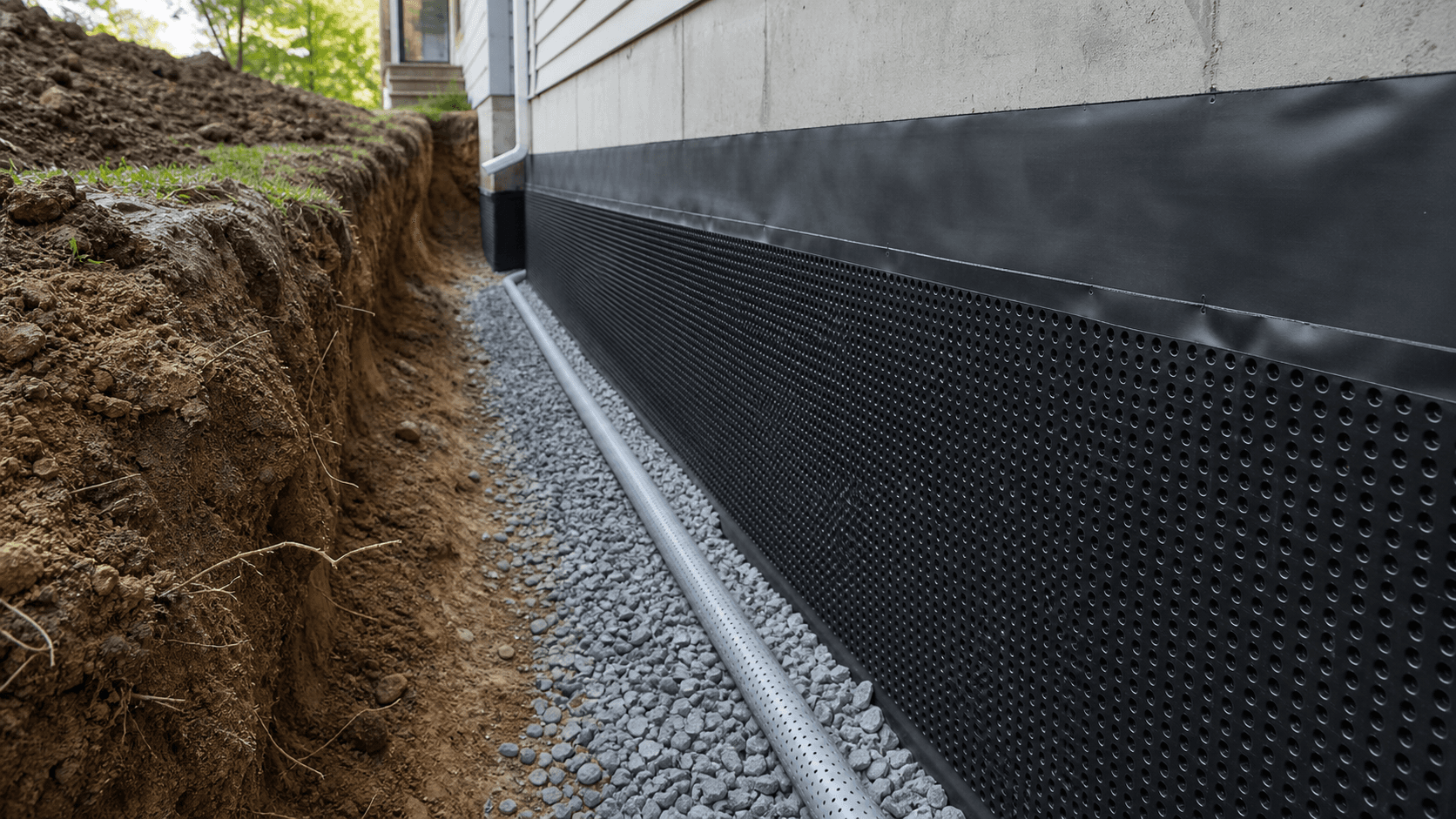
Exterior basement waterproofing membrane and drain beside a foundation wall
Exterior waterproofing works from the source side of the wall, while interior systems collect water after it reaches the basement perimeter.

Side-by-side

Interior waterproofing compared with Exterior waterproofing

FactorInterior waterproofingExterior waterproofingBottom line

Main job

Collect water at or near the inside perimeter and route it to a sump or drain path.

Reduce or block water on the outside face of the foundation wall before it enters.

Interior manages water; exterior works closer to the source.

Best fit

Cove-joint seepage, perimeter water, floor pressure, drain-to-sump systems, and finished-lot constraints.

Wall-side leakage, failed exterior drainage, membrane failure, and accessible source-side wall repair.

The first wet point should decide the method.

Disruption

Concrete opening, dust control, basement access, finished-wall removal, and floor patching.

Excavation, utility locating, landscaping, patios, decks, backfill, and exterior restoration.

Interior disruption is usually indoors; exterior disruption is usually site-wide.

Cost pattern

Often lower for common perimeter seepage, but cost rises with full perimeter drains, pumps, backup, and finished materials.

Often higher because excavation, depth, utilities, membrane work, drains, and restoration drive labor.

Scope matters more than the method name.

Limit

Does not stop all exterior water from reaching the foundation wall.

May be impractical where access is blocked or the issue is below-slab pressure handled better from inside.

Each method has limits that should be written into the quote.

Decision framework

Use the water path to make the choice

A good comparison starts by naming the water path. Water that begins at a wall crack, water that appears at the wall-floor joint, water that comes through the floor, and water that pools beside the foundation can all point to different solutions. The visible puddle is the end of the story, not the beginning.

Compare methods by what they actually do. Some methods block a narrow path. Some reduce water outside the foundation. Some collect water at the perimeter. Some pump collected water away. Some control humidity after the water source is reduced. A method can be excellent at one job and poor at another.

Disruption matters, but diagnosis should lead the decision. A less disruptive method is attractive when it matches the problem. A more disruptive method may be justified when exterior access, failed footing drains, wall-side water pressure, or source-side repair are truly part of the scope. The estimate should explain why the disruption is necessary.

The quote should connect method, limit, and next step. If a contractor recommends a drain, ask where it collects water and where it discharges. If they recommend a pump, ask how water reaches the basin. If they recommend exterior work, ask what will be excavated and restored. If they recommend paint, ask what pressure or active seepage it is expected to handle.

Inspection clues

What should be checked before choosing a method

The inspection should begin inside the basement during or soon after a rain event if possible. The first wet point, stain line, crack path, odor location, sump basin behavior, wall-floor joint condition, and floor low spots all help separate a water-entry problem from humidity, plumbing, or appliance issues. Photos taken before cleanup are often more useful than a dry basement described from memory.

The exterior walkaround matters just as much. Short downspouts, clogged gutters, low soil beside the wall, mulch piled against siding, settled patios, window wells, driveway edges, and discharge lines that empty near the foundation can all change the comparison. A method chosen without reviewing the outside of the same wall is often a guess dressed up as a recommendation.

Finished basements need a different level of caution. Drywall, insulation, flooring, trim, paneling, cabinets, and stored belongings can hide the first wet point and raise the cost of correction. Before comparing methods, ask whether exploratory removal is needed and whether the waterproofing quote includes any restoration or only the repair system itself.

If the contractor uses a moisture meter, camera, level, sump test, hose test, or exterior grade check, ask how the finding changed the recommendation. The tool is useful only when it connects evidence to the repair method. A clear explanation is more valuable than a long list of equipment used during the visit.

Cost and warranty

Compare the risk, not only the price

Cost comparisons should separate initial installation from failure risk. Waterproof paint may have a low material cost, but it can become expensive if active seepage returns after walls or flooring are finished. Exterior excavation may cost more upfront, but it may be justified when the outside wall truly needs repair. Interior drainage may be a middle path, but it depends on pump reliability and discharge design.

Warranty language can make two estimates sound similar when they are not. Look for exclusions around hydrostatic pressure, power loss, pump failure, clogged discharge lines, structural movement, exterior drainage, finished-material damage, mold cleanup, and maintenance. The method matters, but the warranty tells you what the contractor is actually willing to stand behind.

Ask whether the quote is modular. A homeowner may be able to complete exterior drainage corrections first, monitor the next few storms, and then decide whether interior work is still needed. In other cases, delaying a drain or pump could risk a finished basement. The estimate should explain whether staging the work is reasonable or risky for that specific home.

The best comparison pages and estimates do not pretend the cheapest option is always wrong or the most expensive option is always best. They show what each method can do, what it cannot do, what evidence supports it, and what should happen if water returns after the first repair.

Choose by fit

When each option is more likely to fit

Choose Interior waterproofing when...

Water appears at the wall-floor joint

A wet line along the basement perimeter often points toward interior drainage because the system can collect water at the cove joint and move it to a sump basin.

Exterior access is poor

Decks, patios, driveways, tight lot lines, utilities, landscaping, and additions can make excavation expensive or risky. Interior work may control the problem with less site disruption.

Water is pressure-driven under the slab

Floor cracks, perimeter seepage, or water rising near the slab often need collection and pumping rather than only source-side wall coating.

You need a predictable drainage path

Interior drains can be designed to route water to a sump pump with a known discharge point, backup option, and maintenance routine.

Choose Exterior waterproofing when...

The wall exterior needs repair

A failed exterior membrane, damaged footing drain, or source-side crack repair can make exterior waterproofing the more direct approach when access is reasonable.

A specific outside wall is the source

When the entry pattern clearly follows one exterior wall and the yard can be opened safely, exterior work may reduce water before it reaches the basement.

Interior finishes are too valuable to disturb

Some finished basements make interior trenching less attractive. Exterior repair may preserve interior surfaces, although exterior restoration must still be considered.

The project is already exposing the foundation

If excavation is already happening for foundation, utility, drainage, or landscaping work, adding exterior waterproofing may be more practical than scheduling a separate project later.

Combined systems

When the answer may be both

Use both when water pressure is high, the wall exterior needs repair, and interior collection is still needed as backup or for below-slab pressure.
Combine methods when exterior drainage reduces water load but interior drains and a sump pump provide a controlled path for water that still reaches the basement.
Pair exterior work with interior monitoring when a finished basement has a history of repeated water and the cost of failure is high.
Ask for separate line items so you know which part of the price belongs to excavation, membrane work, drain work, sump equipment, discharge, and restoration.

Estimate review

Mistakes and questions before approving work

Mistakes to avoid

  • Choosing exterior work only because it sounds more complete without confirming the water path.
  • Choosing interior work only because it is less disruptive without asking where exterior water will continue to go.
  • Ignoring sump pump reliability when the interior system depends on pumping.
  • Forgetting that exterior excavation may disturb utilities, patios, decks, landscaping, and drainage patterns.
  • Comparing warranties without reading exclusions for pressure, structural movement, sump failure, or finished-material damage.

Questions to ask

  • Where does water first enter, and what evidence supports that diagnosis?
  • Is the proposal blocking water outside, collecting water inside, or doing both?
  • What basement surfaces, exterior surfaces, utilities, landscaping, or finished materials will be disturbed?
  • Where will collected water discharge, and how is recycling back to the foundation prevented?
  • What maintenance, pump backup, and warranty exclusions apply?
  • What scope is excluded from the estimate: cleanup, mold remediation, structural repair, electrical, plumbing, permits, or restoration?

Local notes

Raleigh, Durham, and Fayetteville considerations

Raleigh homeowners should ask how any recommendation handles drainage around the actual lot, not just the basement room. Gutter discharge, grading, patios, finished walls, sump discharge, permits, and electrical work can change which option is practical.

Durham pages should eventually add researched neighborhood and housing-context detail. For now, Durham homeowners should compare recommendations by access, basement finish level, exterior slope, and whether the contractor has explained discharge rather than only naming a product.

Fayetteville homeowners should pay special attention to storm performance. When repeated rain or power loss is part of the history, pump backup, alarms, discharge routing, and cleanup exclusions deserve more weight in the decision.

North Carolina projects can involve local permit, inspection, electrical, plumbing, and contractor-licensing questions depending on scope. Ask who is responsible for checking requirements before work begins.

When comparing local estimates, ask each contractor to describe the same storm scenario. A useful answer should explain how water is collected, where it moves, what happens during a power outage, what surfaces are disturbed, and what the homeowner must maintain after installation.

Related guides

Useful pages before comparing estimates

FAQs

Common comparison questions

Is interior or exterior basement waterproofing better?

Neither is always better. Interior waterproofing manages water that reaches the basement; exterior waterproofing addresses the outside wall and drainage. The right choice depends on the water source, access, disruption, and budget.

Is exterior waterproofing worth the extra cost?

It can be worth it when source-side wall repair, failed exterior drainage, or exterior membrane failure is part of the problem and access is practical. It is not automatically needed for every wet basement.

Can interior waterproofing keep a basement dry?

It can keep many basements usable by collecting water and pumping it away. It should be designed around the entry path, sump reliability, discharge, and maintenance.

Can a basement need both interior and exterior waterproofing?

Yes. Some homes need exterior water reduction plus interior collection and pumping, especially when the risk of water damage is high or pressure comes from more than one path.

Sources

References used for this guide

This guide combines current waterproofing comparison references with public moisture-control and local-permit resources. A site inspection is still needed before choosing a repair method.