Wet Basement Fixes

Exterior waterproofing

Exterior Basement Waterproofing

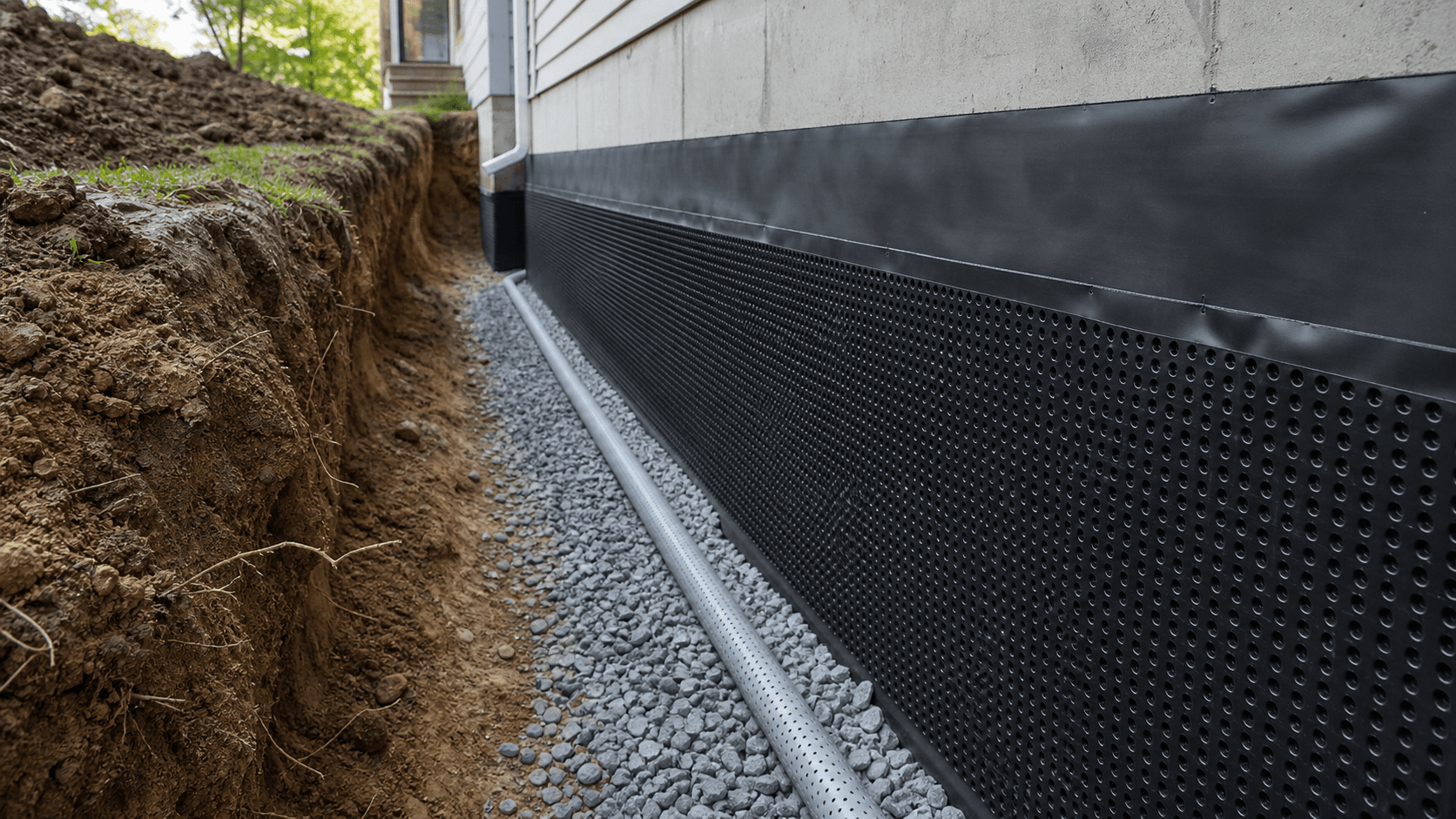
Exterior basement waterproofing works from the source side of the wall. It may involve excavation, cleaning and repairing the foundation, applying waterproofing materials, installing drainage board, and replacing or adding footing drainage.

Direct answer

What this service does

  • Exterior waterproofing is often the most direct way to address water at the outside wall, but it is also more disruptive than many interior approaches. The home may need excavation to the footing, wall cleaning, crack repair, membrane application, drainage board, footing drain work, and careful backfill.
  • This method may be useful when a wall leak is tied to exterior pressure, a failed exterior drain, membrane failure, or a wall that needs source-side repair. It is not automatically better for every basement because cost, access, landscaping, patios, utilities, and risk all matter.
  • A strong exterior estimate should explain what will be excavated, how the wall will be prepared, what waterproofing product is used, how footing water will drain, where discharge goes, and what surfaces will be restored.

This page is educational. A qualified professional should inspect the home before diagnosis, pricing, or repair decisions.

Service overview

What this waterproofing service is designed to solve.

Use this section to see when the service fits, when it may not, and what evidence should support the recommendation.

Exterior basement waterproofing membrane and drain pipe beside an excavated foundation
Exterior work can address the outside face of the foundation, but access, excavation depth, utilities, landscaping, and restoration make scope important.

Good fit when

  • Specific wall leaks where source-side repair is practical.
  • Failed exterior footing drains or exterior membranes.
  • Basements where interior finishes make interior trenching less desirable.
  • Projects already involving exterior excavation or foundation access.

Not the right fit when

  • Homes where utilities, additions, patios, decks, or property constraints make excavation impractical.
  • Water caused primarily by sump pump failure, plumbing, or interior humidity.
  • Structural wall movement without proper structural scope.
  • Homeowners expecting a low-disruption project.

How it works

How the service is usually planned.

The exact scope depends on the home, but each recommendation should explain the water path, the system components, and how the result will be tested.

1

Excavate to expose the foundation

Soil is removed along the affected wall, often down to the footing. This is the step that creates much of the access, safety, utility, and restoration complexity.

2

Clean and repair the wall

The outside wall may need cleaning, crack repair, patching, or surface preparation before waterproofing materials are applied.

3

Apply membrane or waterproofing layer

A waterproofing membrane, coating, or sheet system is installed to resist water entry on the outside face of the wall.

4

Add drainage protection

Drainage board, protection board, gravel, and footing drains help move water away from the wall and reduce pressure.

5

Backfill and restore surfaces

Soil, landscaping, walkways, patios, or other surfaces may need restoration. These details should be in the estimate.

Inspection scope

What should be checked before this service is quoted?

Waterproofing estimates should not be based only on a quick glance at the puddle. The inspection should connect visible symptoms to exterior water, interior drainage, sump reliability, affected materials, and access limits.

Which wall leaks and whether exterior access is possible.

Utilities, gas, electric, water, sewer, irrigation, decks, patios, HVAC lines, and landscaping.

Foundation material, crack pattern, footing depth, and wall condition.

Where footing drains or collected water will discharge.

What restoration is included after backfill.

Cost factors

Why estimates for this service can vary so much.

A useful estimate separates the base system from access, restoration, backup, discharge, electrical, and add-on repair costs.

Excavation depth, length, soil conditions, and access.

Utility locating, hand digging, shoring, and safety requirements.

Wall preparation, crack repair, membrane type, drainage board, and footing drain work.

Landscaping, hardscape, deck, driveway, or patio removal and replacement.

Discharge routing, permits, restoration, and weather delays.

Avoid shortcuts

What homeowners should avoid before approving work.

Waterproofing recommendations can sound similar even when the scopes are very different. One quote may include drainage, sump equipment, discharge, concrete restoration, backup planning, and maintenance. Another may include only a surface treatment or pump swap. Ask enough questions to understand the real system.

Assuming exterior waterproofing is always necessary or always excessive.

Ignoring utility and restoration costs.

Accepting a quote that says waterproofing without naming the membrane and drain details.

Backfilling without a clear drainage path.

Failing to compare interior alternatives when excavation access is poor.

Decision guide

How to compare this service with other waterproofing options.

The strongest repair path is usually the one that explains what water is doing, how the system changes that path, and how the result will be maintained.

Start by separating source control from water management. Source control reduces the amount of water reaching the foundation through gutters, downspouts, grading, exterior drains, window-well drainage, excavation, wall repair, or membranes. Water management accepts that some water may still reach the basement and gives it a path through interior drains, sump basins, pumps, discharge lines, and backups. Many homes need both. A quote that presents one method as the universal answer should be questioned.

Next, compare disruption. Interior work may involve concrete cutting, dust control, storage movement, sump work, and finished-wall removal. Exterior work may involve excavation, utility locating, landscaping, patios, decks, drainage pipe, backfill, and surface restoration. Pump work may look simple but still depends on electrical safety and discharge routing. Crack repair may be small in footprint but can fail if pressure or movement is ignored.

Then compare reliability. Ask what happens during a long rain, a power outage, a clogged gutter, a blocked discharge, a failed pump, or a storm that produces more water than usual. If the answer depends on maintenance, ask who performs it and how often. If the answer depends on a warranty, ask what the warranty excludes. If the answer depends on local discharge or exterior drainage, ask where the water goes and whether it can return to the foundation.

Finally, compare the quote to the symptom. A wall-floor joint leak, a broad damp wall, a leaking crack, a floor crack, an overflowing sump basin, and a musty finished basement can all be called basement water problems, but they should not automatically receive the same repair. The best contractor conversation should make you feel clearer about the problem, not just pressured to buy a system.

A strong service recommendation should also explain sequencing. Some work should happen before other work. For example, exterior roof water should be reviewed before a homeowner pays for interior finishes. A sump pump should be matched to the water it will actually receive. A drain should have a clear discharge route before concrete is patched. A crack should be evaluated for movement before it is treated as a simple leak path. If a quote skips the sequence and jumps straight to installation, ask how the contractor ruled out the simpler or more urgent issues.

Ask whether the service is correcting a cause, managing a result, or doing both. Correcting a cause might mean extending downspouts, changing grade, repairing an exterior wall, replacing a failed footing drain, or improving window-well drainage. Managing a result might mean collecting water at the inside perimeter and pumping it out. Both approaches can be legitimate. The problem comes when a proposal uses broad language like “waterproof the basement” without saying which part of the water cycle it is changing.

Think about the basement as a system. The walls, floor, gutters, soil, window wells, drains, sump basin, pump, discharge line, humidity, stored materials, and finished surfaces all interact. A new pump may fail to solve a wall leak. A beautiful exterior membrane may not help if the discharge line empties beside the house. A sealed crack may stop one leak while the wall-floor joint still gets wet. A dehumidifier may make air feel better while water continues entering behind a finished wall. The service should fit the system, not just the sales category.

Maintenance should be discussed before installation, not after the first storm. Pumps need testing. Battery backups need replacement schedules. Discharge lines need to stay open. Gutters need cleaning. Downspout extensions can be moved by landscaping or yard work. Exterior drains can collect sediment. Interior drains can be affected by debris, floor work, or pump failure. Ask what the homeowner is responsible for, what warning signs mean service is needed, and how to confirm the system is working after heavy rain.

Warranty language deserves careful reading. A warranty may cover a pump, a liner, a crack repair, workmanship, or a specific treated area. It may not cover power outages, plumbing leaks, sewer backup, grading changes, clogged gutters, structural movement, finish materials, or water entering somewhere outside the repaired area. A strong contractor should be willing to explain warranty limits in normal language. If the warranty sounds broad in conversation but narrow in writing, rely on the written version.

If the basement is finished, slow down even more. Finished walls and flooring can hide the first water path and can make repair more disruptive. Before approving work, ask whether baseboards, drywall, insulation, flooring, cabinets, stairs, or mechanical equipment must be removed. Ask who restores those materials and whether moisture-damaged materials should be replaced before waterproofing is considered complete. EPA moisture guidance is clear that controlling moisture is central to avoiding recurring indoor problems, so the hidden materials matter as much as the visible system.

If the basement is unfinished, use that advantage. Unfinished walls and floors make it easier to photograph cracks, stains, efflorescence, damp joints, sump behavior, and water lines. Keep those photos organized by date and storm. A contractor can give a better recommendation when they can see whether water starts high on a wall, low at the perimeter, through a floor crack, around a pipe, below a window, or at the sump basin. Better evidence often leads to a tighter scope.

The final comparison is value, not price alone. The lowest estimate may be the best value if it solves a specific, limited problem with clear evidence. A higher estimate may be the better value if it includes drainage, pump reliability, discharge, backup, restoration, and maintenance that another quote omitted. The goal is not to buy the biggest system. The goal is to buy the scope that matches the water pattern and gives you a clear way to judge whether the work succeeded.

Before signing, ask for a plain-language summary you could repeat back without trade jargon: the water starts here, it moves this way, this service changes that path by doing these steps, the water leaves the property here, these materials will be disturbed, these items are excluded, and this is how we know the work is performing. If that summary is hard to get, the estimate may not be ready for approval yet.
Related pages

Read these before comparing estimates.

These pages help connect the service to visible symptoms, costs, comparison questions, and local markets.

Local context

Raleigh, Durham, and Fayetteville service pages should be specific.

The first local pages should help homeowners ask better questions, not pretend every property in a city has the same drainage problem.

Raleigh and Durham properties may have mature landscaping, tight lots, patios, and finished spaces that change the interior-vs-exterior decision.

Fayetteville estimates should explain stormwater discharge and how excavated exterior work connects to broader drainage.

Local utility, permit, and discharge details should be verified before making city-specific claims.

Estimate prep

Questions to ask before approving this service.

A contractor should be able to explain the system in plain language before you compare price.

How deep and how far will excavation go?

What utilities or hardscapes affect access?

What membrane or waterproofing product is included?

Will footing drains be repaired, replaced, or added?

Where will collected water discharge?

What landscaping and surfaces will be restored?

Request an estimate

Common questions

Exterior Basement Waterproofing FAQs

These answers help you understand fit, limits, and contractor questions before choosing a waterproofing scope.

Is exterior waterproofing better than interior waterproofing?

It is better for some source-side wall problems, but not every basement. Access, cost, disruption, leak pattern, and water source matter.

Does exterior waterproofing require digging?

Usually, yes. True exterior wall waterproofing commonly requires excavation to expose the wall.

Can exterior waterproofing fix wall cracks?

It may be part of wall crack repair, especially when the crack is repaired and waterproofed from outside, but structural cracks need careful review.

What should be included in an exterior waterproofing quote?

Excavation scope, wall prep, repair materials, membrane, drainage board, footing drain work, discharge, backfill, and restoration should be clear.

Sources

Sources and review notes

These service pages use public moisture, cleanup, and home-maintenance guidance for boundaries and should be updated as local pricing or contractor availability changes.

Last reviewed: August 2, 2026. This page is educational and does not provide structural, mold, electrical, plumbing, insurance, legal, or health advice.