Wet Basement Fixes

Basement wall seepage

Water Coming Through Basement Wall

Water coming through a basement wall usually means moisture is reaching the outside face of the foundation and finding a path through cracks, masonry joints, porous block, pipe penetrations, or pressure points. The pattern matters more than the puddle size.

Direct answer

What this symptom usually means

  • Water that comes through a basement wall is usually not a surface cleaning problem. It is a water-path problem. Rainwater, saturated soil, poor drainage, a failed exterior footing drain, a crack, or porous masonry may be allowing water to press against the wall until it finds the easiest opening.
  • The first question is where the water starts. A wet wall-floor joint points to a different repair conversation than a vertical crack, a pipe sleeve, a window-well leak, or broad damp block. A contractor should be able to connect the proposed repair to the exact entry pattern.
  • Do not assume waterproof paint is enough for active seepage. Coatings can be useful in limited conditions, but water pressure behind the wall can cause bubbling, peeling, or a leak that moves elsewhere.

This page is educational. It does not diagnose structural, mold, plumbing, electrical, insurance, or health issues remotely.

Visible clue

Start by documenting the exact pattern.

A basement water symptom is most useful before it has been cleaned, dried, painted over, or hidden by finished materials.

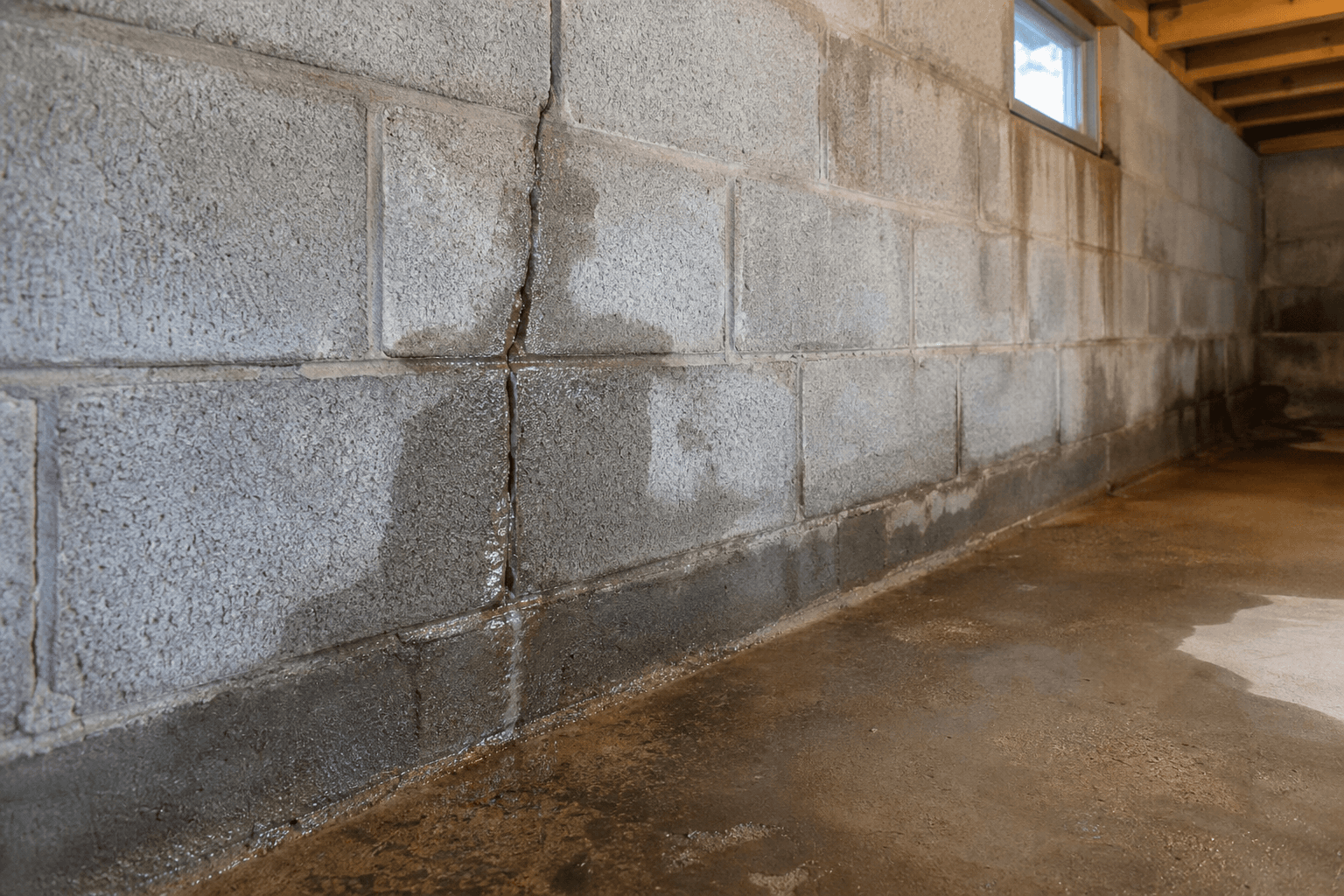
Water seeping through a basement foundation wall crack
A repeat wet spot on the wall is useful evidence. Track where the stain starts, whether it follows a crack or joint, and whether it appears only after rain.

Water that comes through a basement wall is usually not a surface cleaning problem. It is a water-path problem. Rainwater, saturated soil, poor drainage, a failed exterior footing drain, a crack, or porous masonry may be allowing water to press against the wall until it finds the easiest opening.

The first question is where the water starts. A wet wall-floor joint points to a different repair conversation than a vertical crack, a pipe sleeve, a window-well leak, or broad damp block. A contractor should be able to connect the proposed repair to the exact entry pattern.

Do not assume waterproof paint is enough for active seepage. Coatings can be useful in limited conditions, but water pressure behind the wall can cause bubbling, peeling, or a leak that moves elsewhere.

The strongest clue is a repeatable starting point. If the same block, mortar joint, crack, or pipe penetration gets wet after rain, photograph it before the water spreads. If a broad wall area darkens evenly, moisture may be moving through masonry or exterior soil may be staying saturated along that wall.

Likely causes

What can cause this basement water problem?

Most wet-basement symptoms have more than one possible cause. A good repair recommendation should explain which cause is most likely and what evidence supports it.

1

Exterior water is collecting against the wall

Roof water, short downspouts, clogged gutters, poorly sloped soil, or sunken landscaping can hold water beside the foundation. The wall may be sound in dry weather but leak when the soil outside becomes saturated. NC State Extension maintenance guidance emphasizes keeping roof water draining away from foundation walls, which is why exterior drainage belongs in the first inspection pass.

2

A crack or construction joint is acting as the entry path

A wall crack may leak only during long rains. Vertical cracks, diagonal cracks, pipe sleeves, form-tie holes, and cold joints can all become water paths. Some cracks are mainly leakage concerns; others deserve structural review when they widen, shift, run horizontally, stair-step through masonry, or appear with wall movement.

3

Block or masonry is absorbing and releasing moisture

Concrete block and masonry walls can show dark damp patches or white mineral deposits when moisture moves through them. This does not automatically mean the wall is failing, but it does mean cleaning or painting alone may not address the source. The exterior water load and interior humidity both need context.

4

A window well or below-grade opening is involved

Water near a basement window may come from clogged window-well drains, missing covers, soil settling, or a window frame leak. If the wet area begins below a window and spreads down the wall, the window well should be inspected before assuming the whole wall needs a perimeter system.

5

Interior drainage is missing, blocked, or incomplete

If water enters through the wall and then runs to the floor, an interior perimeter drain may be recommended to collect it. That does not stop water from reaching the wall, but it can move water to a sump basin in a controlled way when exterior correction is impractical or incomplete.

Urgency

When to act quickly and when to monitor.

Urgency depends on safety risk, recurrence, water volume, finished materials, electrical exposure, and whether the symptom is changing.

Level
Signs
Suggested action
Higher urgency
Active water is near electrical equipment, finished walls, insulation, or stored valuables.
Dry the area safely and request inspection promptly.
Structural caution
The wall is bowing, leaning, cracked horizontally, or shedding masonry.
Avoid relying on waterproofing alone; ask about structural review.
Recurring issue
The same wall area leaks after repeated storms.
Document the pattern and compare drainage, crack repair, and interior drain options.
Monitor
A small damp patch appears once during an unusual storm and dries quickly.
Check exterior drainage and keep photos for the next rain.

Avoid shortcuts

What not to do before the source is clear.

Wet-basement symptoms can be frustrating because quick surface fixes are tempting. The risk is that paint, caulk, flooring, fragrance, or a pump-only replacement can hide evidence while the water path remains active. Slow down long enough to understand whether the issue is exterior water, groundwater pressure, a crack, a sump system, humidity, or another source.

This does not mean every symptom needs the most expensive repair. It means each recommendation should make sense for the pattern. A small isolated leak, a repeated wall-floor joint problem, a pump failure, and a broad flooding event should not all receive the same explanation.

Painting over active seepage without correcting the water source.

Assuming every wall leak requires full exterior excavation.

Ignoring gutters and grading because the water is visible indoors.

Finishing the basement wall before the leak pattern is understood.

Treating a moving or bowing wall as a simple waterproofing problem.

Repair paths

Which waterproofing or moisture-control options may apply?

The right option should match the source. These related pages help you compare what each method does, what it does not do, and what questions to ask before approving work.

Local context

Raleigh, Durham, and Fayetteville estimates should still come back to the individual house.

Local pages are useful for service-area intent, but they should not turn into city-name swaps. The best local guidance explains which property details should be checked before a homeowner compares waterproofing recommendations.

For Raleigh and Durham homeowners, ask whether the estimate accounts for roof drainage, mature landscaping, patios, and finished basement areas that could affect access.

For Fayetteville homeowners, ask how the system handles heavy rain, discharge location, sump reliability, and recurring water at the same wall.

Avoid city pages or estimates that claim the same wall repair works for every basement. Wall material, access, drainage, and leak pattern should drive the recommendation.

Decision guide

How to think through this problem before comparing quotes.

A good wet-basement page should do more than name a symptom. It should help you move from observation to evidence, from evidence to likely causes, and from likely causes to the right repair conversation.

Start with the idea that water coming through basement wall is a symptom, not a complete diagnosis. The visible water, odor, residue, crack, or pump problem tells you where the home is showing stress. It does not automatically tell you whether the source is roof runoff, surface grading, groundwater pressure, a wall crack, a floor crack, a window well, a plumbing leak, a sump pump failure, or a combination of several issues. This is why the first inspection step should be descriptive rather than sales-driven: where did the symptom begin, when did it appear, how often does it repeat, and what changed outside or inside the home before it appeared?

The second step is to separate water source from water pathway. The source is where the water is coming from: roof runoff, saturated soil, groundwater, a plumbing fixture, a window well, or a failed discharge line. The pathway is how it enters or affects the basement: through a crack, through masonry, at the wall-floor joint, below the slab, around a pipe penetration, through a sump basin, or through damp materials that hold moisture after the rain stops. A strong repair plan should address both. If a quote talks only about the pathway but ignores why water reaches that area, ask for more explanation.

The third step is to decide whether the problem is isolated or systemic. An isolated issue might be one leaking crack, one blocked window well, one short downspout, or one sump pump with a failed float switch. A systemic issue may show up along several walls, around the basement perimeter, through floor cracks, during most storms, or in multiple rooms. Systemic patterns often require drainage design, discharge planning, and maintenance thinking rather than a small patch. Isolated patterns can still be serious, but they should not automatically be priced like a whole-basement system.

The fourth step is to keep safety boundaries clear. Basement water can involve electricity, appliances, HVAC equipment, stored chemicals, contaminated water, mold-like growth, wet drywall, structural movement, and slippery surfaces. This site can help you organize questions, but it cannot tell you that a wet area is safe, that a material is mold, that a crack is structural, or that a cleanup method is sufficient for your home. When the situation involves electrical exposure, sewage, fuel, health concerns, or wall movement, the next step should be qualified in-person help.

The fifth step is to compare repairs by function. Exterior waterproofing tries to reduce or block water on the outside of the foundation. Interior drainage collects water that reaches the basement perimeter and routes it to a sump basin. A sump pump removes collected water but does not collect water from every part of the basement by itself. Crack repair seals a specific leak path but may not relieve pressure against the wall. Dehumidification controls air moisture but does not stop active seepage. These functions overlap, and many real projects combine more than one of them.

The sixth step is to ask what the estimate excludes. Waterproofing quotes often exclude electrical work, plumbing work, finished-wall removal, flooring repair, mold remediation, structural repair, exterior landscaping, concrete restoration, utility conflicts, permit handling, or backup power. Exclusions are not automatically bad; they simply need to be clear. A lower quote that leaves out discharge routing, backup pump planning, or finish repair may not be cheaper once the whole project is understood.

The seventh step is to think about repeat storms. A basement can look dry after cleanup and still have the same weakness waiting for the next rain. Ask how the proposed repair will perform during long rain, heavy rain, power loss, clogged gutters, frozen or blocked discharge, and normal maintenance lapses. If the system depends on a pump, ask about testing and backup. If it depends on exterior drainage, ask where water goes. If it depends on a sealed crack, ask what happens if the crack moves or pressure returns.

The final step is to keep documentation. Save photos, dates, rainfall timing, water depth, humidity readings, pump behavior, contractor notes, and before-and-after conditions. Documentation helps you compare estimates, explain the problem to a contractor, decide whether a repair solved the issue, and avoid paying twice for work that addressed the wrong source. The goal is not to become a waterproofing expert; the goal is to become specific enough that vague recommendations are easy to spot.

After any repair, judge success across more than one weather event. A basement that stays dry for a week during clear weather has not really tested a drainage system, crack repair, pump replacement, or exterior correction. Recheck the same location during ordinary rain, heavy rain, long wet periods, and the first storm after gutters fill with leaves. Test the sump pump according to the installer's instructions, keep discharge lines visible where practical, and watch for new damp spots that appear away from the original symptom. If the repair changed where water appears rather than stopping or collecting it properly, follow up while the evidence is fresh.

Maintenance also belongs in the decision, not as an afterthought. Gutters need cleaning, downspout extensions can be knocked loose, window wells can collect debris, pumps age, check valves fail, and exterior grades can settle again. Ask what the homeowner is expected to inspect, how often the system should be tested, what warning signs mean service is needed, and which parts are covered by warranty. A repair that works only when every hidden component is perfect may not be the best fit for a basement that gets regular stormwater pressure.

Estimate prep

Questions to ask before approving work.

Good waterproofing estimates are specific. They identify the source, method, discharge path, affected materials, warranty limits, and exclusions.

Where exactly is water entering the wall, and what evidence supports that?

Is the recommendation sealing a crack, reducing exterior water, collecting interior water, or combining those steps?

Will the work disturb finished walls, flooring, landscaping, patios, utilities, or exterior soil?

How will water be discharged away from the house?

What happens if water appears from a different section of the wall later?

Are structural wall concerns excluded from this waterproofing estimate?

Request an estimate

Common questions

Water Coming Through Basement Wall FAQs

These short answers help you decide what to document, which related page to read next, and when to bring in qualified help.

Can water seep through concrete or block walls?

Yes. Water can move through cracks, joints, penetrations, porous masonry, or weak points when exterior soil is saturated. The visible wet spot is a clue, not a complete diagnosis.

Will waterproof paint stop water coming through a basement wall?

Sometimes coatings help with minor dampness, but active seepage usually requires source control, crack repair, drainage, or a system that relieves pressure. Paint should not be the only plan for recurring leaks.

Does wall seepage mean the foundation is structurally unsafe?

Not automatically. Many wall leaks are water-management problems. However, bowing, horizontal cracking, widening cracks, or wall movement should be reviewed carefully.

Should the repair happen from inside or outside?

It depends on the water source, access, disruption, budget, and wall condition. Exterior work addresses the source side; interior systems manage water after it enters.

Sources

Sources and review notes

These pages use public safety and home-maintenance sources for boundaries, then connect those boundaries to basement-waterproofing search intent.

Last reviewed: August 2, 2026. This article is educational and should be updated when local pricing, contractor availability, images, or source guidance changes.