Wet Basement Fixes

Diagnostic guide

How to Find the Source of Basement Water

Finding the source of basement water starts with the first wet point, not the biggest puddle. Use timing, location, stains, cracks, sump behavior, and exterior drainage clues to narrow the likely path.

How to use this page

  • Start with the symptom or decision closest to your situation.
  • Compare repair options before choosing a contractor quote.
  • Check cost assumptions, safety boundaries, and related guides.
  • Request an inspection when water, odor, humidity, insulation, or wood concerns are active.

Quick answer

Start with safety, timing, and the first wet point

To find the source of basement water, start by documenting where the water first appears, when it appears, and what was happening outside at the same time. Water after rain usually points toward exterior drainage, wall seepage, floor pressure, window wells, sump limits, or a wall-floor joint issue. Water in dry weather may point toward plumbing, appliances, HVAC condensate, sewer backup, or humidity instead.

Do not start by sealing or painting the wet spot. A coating can hide useful evidence and may fail if water pressure remains. Instead, take photos, mark the first wet point, check the nearest outside wall, observe the sump basin, and compare the pattern after the next rain.

A homeowner can safely gather clues, but a guide cannot confirm the final diagnosis from symptoms alone. Standing water near electrical equipment, sewage odor, contaminated water, structural wall movement, or repeated flooding deserves professional help before routine waterproofing decisions.

Last reviewed: August 2, 2026
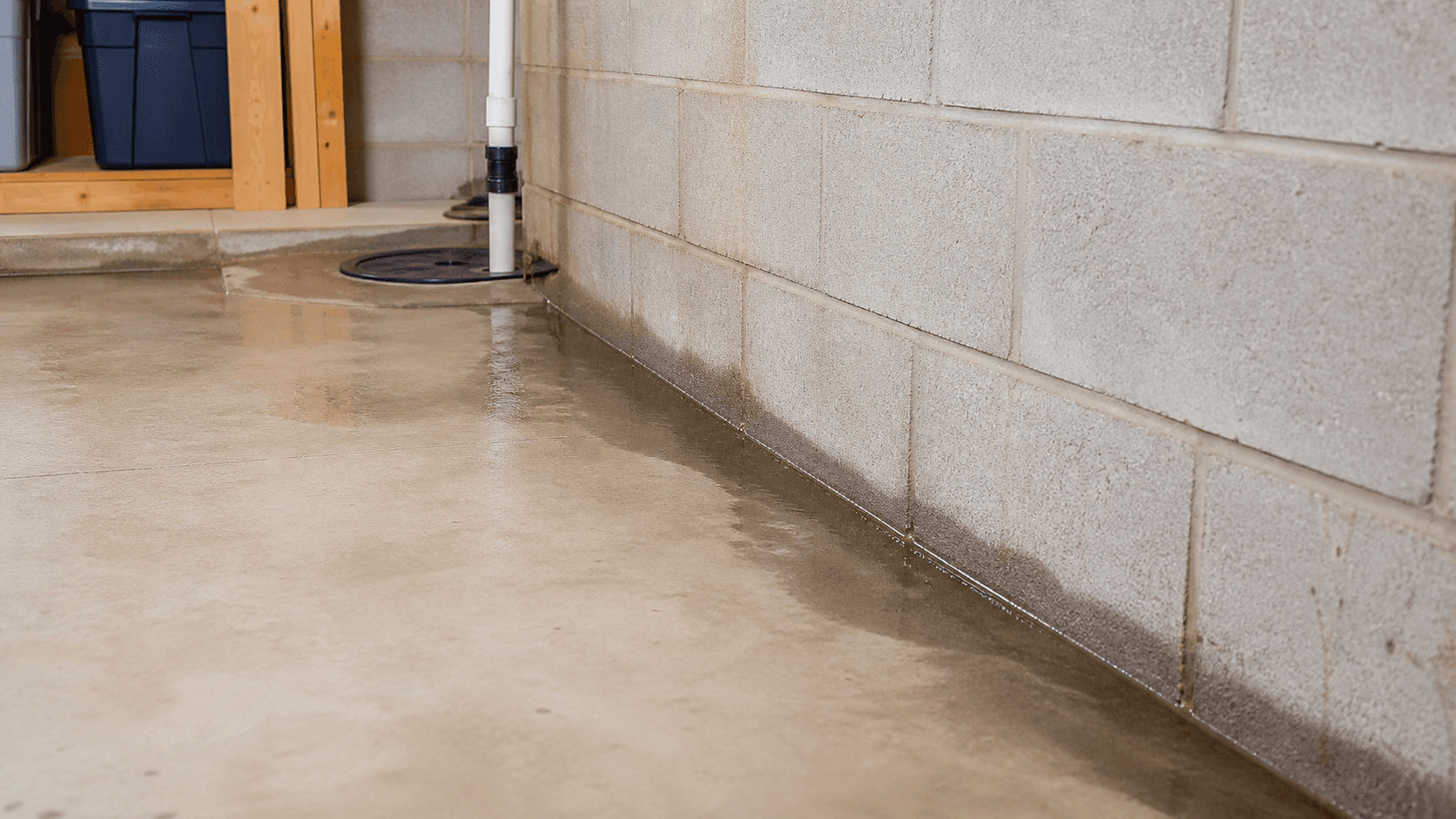
Water at the basement wall-floor joint after rain
The first wet line, stain, crack, or floor edge is more useful than the final puddle after water spreads.

Clue table

What common observations may mean

ObservationPossible meaningUseful next step

Water appears after rain at the wall-floor joint

Perimeter pressure, cove-joint seepage, or water collecting at the footing area.

Review interior drainage, sump capacity, exterior drainage, and the wall-floor joint problem page.

Water follows a vertical wall crack

A crack or penetration may be the entry path, especially if the same line wets during storms.

Photograph the crack, check exterior drainage at that wall, and compare crack repair with drainage options.

Water comes through the basement floor

Below-slab pressure, floor cracks, sump limitations, or water spreading from the perimeter.

Find whether the first water point is a crack, low spot, basin, or wall-floor joint.

Water is near a window well

Window-well drainage, missing cover, settled soil, clogged drain, or frame leakage may be involved.

Check the well outside before assuming the whole wall needs waterproofing.

Water appears near equipment in dry weather

Water heater, washer, condensate line, plumbing, or drain issue may be more likely than groundwater.

Rule out plumbing and appliance sources before approving waterproofing work.

Field guide

How to think through basement water

A basement water guide should begin with observation, not demolition. The safest first step is to identify the first wet point, the timing, the weather conditions, and the surrounding clues before anyone starts opening walls, cutting concrete, or buying a repair product. A small note made during the storm can prevent a much more expensive guess later.

The most useful pattern is repeatability. Water that appears in the same wall crack after every hard rain points to a different repair conversation than water that appears once after a power outage, under a water heater, near a window well, or across a whole floor. The more repeatable the pattern, the easier it is to compare repair options.

Exterior clues belong in every guide because basement water often starts outside. Roof water, short downspouts, clogged gutters, low soil beside the foundation, settled patios, window wells, and discharge lines can all send water toward the same basement wall. NC State Extension guidance emphasizes clean, maintained gutters and downspout water carried away from the home.

Professional boundaries matter. Homeowners can document water, move dry belongings, check visible drainage clues, and run a sump test from a safe dry location. They should not stand in water near electrical equipment, handle contaminated water without protection, diagnose structural movement from photos alone, or treat mold and health questions as simple waterproofing decisions.

Step-by-step

Work through the guide in order

1

Start with safety

Before stepping into a wet basement, look for standing water near outlets, extension cords, electrical panels, appliances, or sump equipment. If power needs to be turned off and the switch cannot be reached from a dry location, CDC flood guidance recommends calling an electrician rather than entering water to reach it.

2

Find the first wet point

Water spreads toward low areas, drains, and floor cracks, so the largest puddle can be misleading. Look for the highest wet stain, the beginning of the wet floor line, a drip point, a damp block, a crack, or a small trail that appears before the floor is fully wet.

3

Match water to timing

Water that appears during heavy rain, after long wet periods, or when snow melts points toward exterior drainage or groundwater. Water that appears when fixtures run, when a water heater cycles, or when HVAC equipment operates may be plumbing or mechanical.

4

Walk the outside wall

Stand outside the same wall where the basement is wet. Check gutter overflow, downspout length, soil slope, mulch beds, patios, window wells, driveway edges, and discharge lines. Water outside often explains water inside.

5

Watch the sump system

During rain, note whether the basin fills, whether the pump turns on, whether it short-cycles, whether the discharge line moves water away, and whether water returns toward the foundation. A working pump can still be part of an incomplete drainage system.

6

Separate water from humidity

A musty smell, condensation, and damp surfaces are not always active leaks. Humidity problems still matter, but they lead to different questions about ventilation, dehumidification, wet materials, and moisture control.

Safety and evidence

Protect people first, then protect the record

Safety boundaries

  • Do not enter standing water near electrical equipment or wet electrical devices.
  • Do not use a gas-powered pump, generator, pressure washer, or engine indoors or near openings because of carbon monoxide risk.
  • Do not assume floodwater is clean; it may contain sewage, chemicals, or other contaminants.
  • Do not tear into finished walls if mold-like growth, electrical wiring, or structural cracking may be involved without the right help.
  • Do not treat bowing walls, horizontal cracks, or major movement as ordinary seepage.

What to document

  • Take photos from far away, medium distance, and close up before cleanup changes the evidence.
  • Mark the first wet point with tape if it is safe and the surface is dry enough nearby.
  • Record date, rain amount if known, storm duration, pump behavior, and whether power went out.
  • Photograph exterior drainage at the same wall, including downspouts, gutters, soil slope, patios, window wells, and discharge lines.
  • Save contractor notes and ask each estimator to explain how the evidence supports the recommended method.

Next-step planning

Turn observations into the right kind of action

After the first observation pass, sort the problem into one of four buckets: urgent safety issue, cleanup and drying issue, diagnosis issue, or repair planning issue. A flooded basement with electrical risk belongs in the first bucket. Wet drywall and carpet belong in cleanup and drying. A repeating wet line after rain belongs in diagnosis. Comparing interior drainage, exterior waterproofing, sump replacement, or crack repair belongs in repair planning.

The order matters because basement water projects can get expensive when steps are skipped. If wet materials remain, a waterproofing estimate may not address odor or indoor-air concerns. If the water source is not identified, a contractor may price a system that manages symptoms but misses exterior water. If discharge is unclear, a new pump or drain can send water right back toward the foundation.

A useful guide note becomes a better estimate when it includes location, timing, weather, water depth, first wet point, drying time, exterior conditions, sump behavior, and what changed after the last repair or storm. These details help separate a maintenance issue from a system design issue.

For homeowners comparing options, the next step should be proportional to risk. A small damp patch that appears once may justify monitoring and exterior maintenance. A repeat leak near finished walls, a failed pump, or standing water after storms should move toward inspection. Electrical concerns, sewage, gas odor, structural movement, or contaminated water should skip routine quote shopping and move directly to the appropriate specialist or emergency help.

Before the estimate

Make the inspection easier to compare later

Before an inspection, clear safe access to the wet wall, sump basin, discharge line, exterior wall, and any window well involved. Do not move heavy items through water or disturb materials that may be contaminated. The goal is to let the estimator see the evidence without creating a new safety problem.

During the inspection, ask the contractor to describe the repair in plain sequence: where water starts, where it enters, where the system collects it, where it discharges, what happens during power loss, and what maintenance the homeowner must perform. A clear sequence is often easier to trust than a polished sales label.

After the inspection, compare scopes line by line. One estimate may be only a pump replacement. Another may include perimeter drainage, a basin, battery backup, discharge rerouting, concrete repair, and finished-material removal. Those are not the same job. The guide notes should help you compare what each proposal is actually solving.

If the basement will be finished later, ask for a higher standard of proof. That can mean storm testing, humidity monitoring, backup pump planning, alarms, better discharge, and written exclusions for materials behind walls. Finishing over uncertainty usually costs more than pausing to verify the water path.

Estimate prep

Questions to ask before choosing a repair

  • Where do you believe water first enters, and what evidence led you there?
  • Is this a wall, floor, wall-floor joint, sump, exterior drainage, window well, plumbing, or humidity issue?
  • Are you recommending source reduction, interior collection, pumping, crack repair, or a combination?
  • What would make this recommendation change after the next storm?
  • What is excluded from the estimate if water appears somewhere else later?

Local notes

Raleigh, Durham, and Fayetteville considerations

Raleigh homeowners should connect guide observations to lot drainage, roof-water discharge, finished basement use, permit questions, and whether a sump or discharge line needs electrical or plumbing coordination.

Durham guidance should stay property-specific until the city pages are expanded. Older additions, tight lots, finished spaces, and exterior access limits can matter more than broad city assumptions.

Fayetteville homeowners should put storm readiness high on the list when a basement has repeated rain-related water. Pump backup, alarms, discharge location, and cleanup exclusions deserve early attention.

For any local estimate, ask the contractor to describe what happens during a heavy rain, where water is expected to move, what part of the system needs maintenance, and what is excluded if water returns.

Avoid these

Common mistakes that make the next estimate weaker

Cleaning everything before taking photos of the first wet point.
Assuming the biggest puddle is where water entered.
Painting or sealing over active seepage before diagnosis.
Ignoring gutters and grading because the wet spot is indoors.
Comparing estimates that are solving different water paths.

After the first step

Monitor the next rain before closing the case

After the first cleanup, repair, or maintenance step, monitor the basement through at least one meaningful rain. Check the original wet point, the sump basin, the discharge location, the outside wall, the humidity level, and any finished materials that were close to the water. A basement can look dry on the surface while damp materials or hidden wall cavities still need attention.

Keep a simple log for the next few storms: date, rain intensity, first wet point, pump activity, discharge behavior, odor, humidity, and whether water returned. This log helps decide whether a small maintenance fix worked, whether a larger drainage system is justified, or whether a prior repair needs follow-up under warranty. It also gives every estimator the same timeline, which makes later recommendations easier to compare.

Related pages

Where to go next

FAQs

Common guide questions

How do I know where basement water is coming from?

Track where water first appears, when it appears, and what exterior or sump clues match the timing. The first wet point is usually more useful than the largest puddle.

Can basement water come from plumbing instead of rain?

Yes. Water near a water heater, washer, condensate line, floor drain, or plumbing fixture during dry weather should be checked before assuming groundwater seepage.

Should I paint the wall to find out if it leaks again?

No. Paint can hide evidence and may fail under pressure. Document the leak pattern first and address the water path.

When should I call a professional?

Call promptly for standing water near electricity, sewage odor, repeated flooding, structural wall movement, or recurring water that returns after basic exterior maintenance.

Sources

References used for this guide

This guide uses public safety, mold, moisture, and drainage references. It is educational and does not replace a local inspection, emergency response, electrician, plumber, mold professional, structural professional, or insurance guidance when those are needed.