Good fit when
- Basements with an existing failed or unreliable sump pump.
- Interior drainage systems that need a discharge point.
- Homes where water collects in a low basin or pit during rain.
- Finished basements where backup and alarm planning matter.
Sump systems
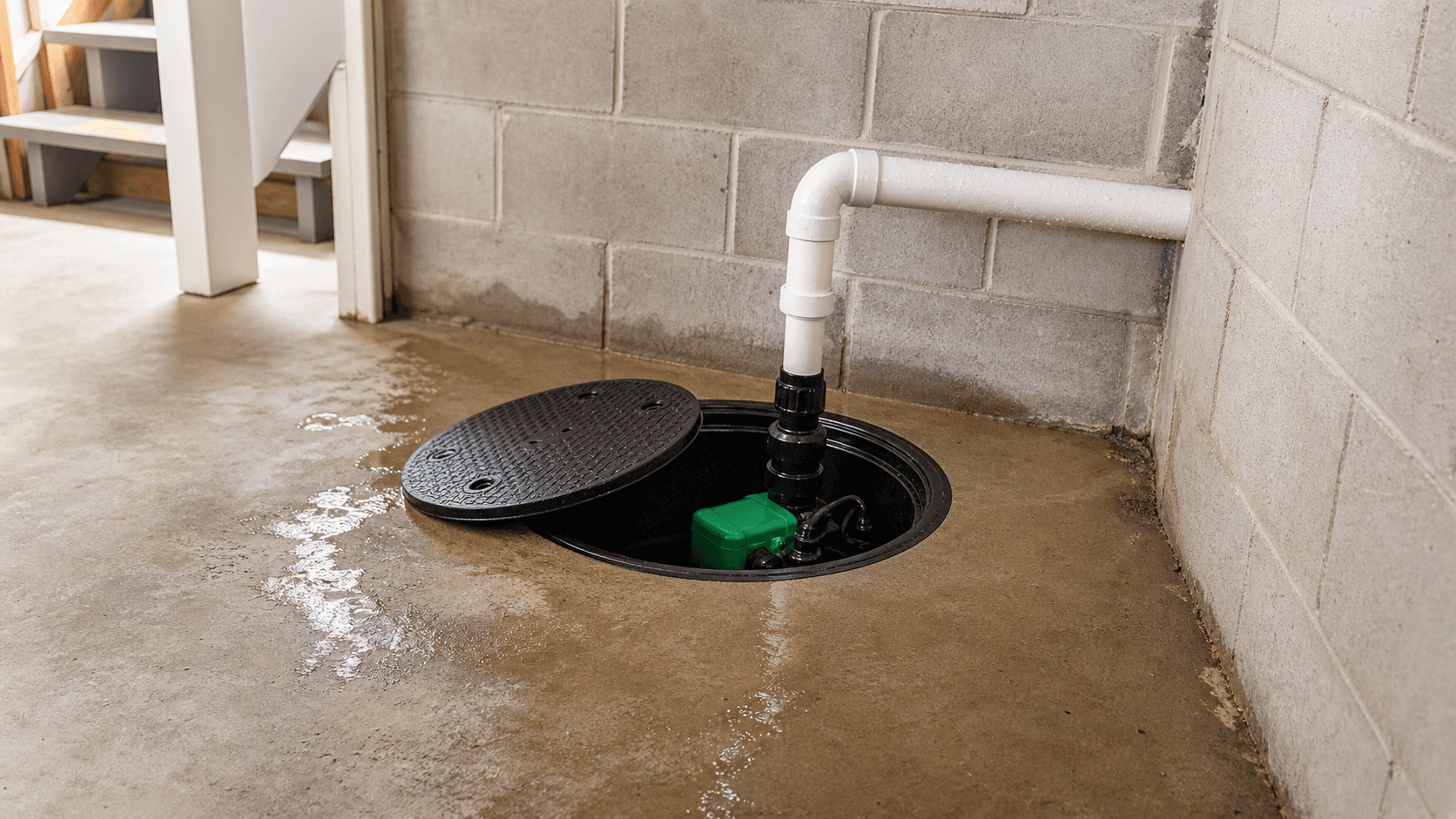
A sump pump removes collected water from a basement basin. It is most reliable when the basin, pump, float, check valve, discharge line, backup, and drainage feeding the basin are designed together.
Direct answer
This page is educational. A qualified professional should inspect the home before diagnosis, pricing, or repair decisions.
Service overview
Use this section to see when the service fits, when it may not, and what evidence should support the recommendation.
How it works
The exact scope depends on the home, but each recommendation should explain the water path, the system components, and how the result will be tested.
Water enters the sump basin from drains, groundwater, or a collection system. The basin should be sized, covered, and positioned for the system.
A float switch turns the pump on when water rises. Switch reliability and clearance are important.
The pump sends water through a discharge line, often with a check valve to reduce backflow.
The line should move water to a location that does not send it back toward the foundation.
Battery backup, secondary pumps, alarms, and testing routines matter when pump failure would lead to flooding.
Inspection scope
Waterproofing estimates should not be based only on a quick glance at the puddle. The inspection should connect visible symptoms to exterior water, interior drainage, sump reliability, affected materials, and access limits.
Existing basin condition, pump age, float operation, lid, and debris.
Drain connections feeding the basin.
Discharge line route, termination, check valve, and backflow risk.
Electrical outlet, GFCI, dedicated circuit needs, and backup options.
History of pump failure, power outage, short-cycling, or overflow.
Cost factors
A useful estimate separates the base system from access, restoration, backup, discharge, electrical, and add-on repair costs.
Pump type, capacity, quality, and warranty.
New basin excavation versus pump-only replacement.
Check valve, lid, alarm, backup pump, battery backup, and discharge line.
Electrical work and outlet/circuit requirements.
Drainage system connection and concrete work.
Avoid shortcuts
Waterproofing recommendations can sound similar even when the scopes are very different. One quote may include drainage, sump equipment, discharge, concrete restoration, backup planning, and maintenance. Another may include only a surface treatment or pump swap. Ask enough questions to understand the real system.
Choosing the cheapest pump for a high-risk finished basement.
Ignoring backup power.
Discharging water beside the foundation.
Replacing the pump without checking the float, basin, and drain connections.
Assuming a pump solves water that appears far from the basin.
Decision guide
The strongest repair path is usually the one that explains what water is doing, how the system changes that path, and how the result will be maintained.
Start by separating source control from water management. Source control reduces the amount of water reaching the foundation through gutters, downspouts, grading, exterior drains, window-well drainage, excavation, wall repair, or membranes. Water management accepts that some water may still reach the basement and gives it a path through interior drains, sump basins, pumps, discharge lines, and backups. Many homes need both. A quote that presents one method as the universal answer should be questioned.
Next, compare disruption. Interior work may involve concrete cutting, dust control, storage movement, sump work, and finished-wall removal. Exterior work may involve excavation, utility locating, landscaping, patios, decks, drainage pipe, backfill, and surface restoration. Pump work may look simple but still depends on electrical safety and discharge routing. Crack repair may be small in footprint but can fail if pressure or movement is ignored.
Then compare reliability. Ask what happens during a long rain, a power outage, a clogged gutter, a blocked discharge, a failed pump, or a storm that produces more water than usual. If the answer depends on maintenance, ask who performs it and how often. If the answer depends on a warranty, ask what the warranty excludes. If the answer depends on local discharge or exterior drainage, ask where the water goes and whether it can return to the foundation.
Finally, compare the quote to the symptom. A wall-floor joint leak, a broad damp wall, a leaking crack, a floor crack, an overflowing sump basin, and a musty finished basement can all be called basement water problems, but they should not automatically receive the same repair. The best contractor conversation should make you feel clearer about the problem, not just pressured to buy a system.
A strong service recommendation should also explain sequencing. Some work should happen before other work. For example, exterior roof water should be reviewed before a homeowner pays for interior finishes. A sump pump should be matched to the water it will actually receive. A drain should have a clear discharge route before concrete is patched. A crack should be evaluated for movement before it is treated as a simple leak path. If a quote skips the sequence and jumps straight to installation, ask how the contractor ruled out the simpler or more urgent issues.
Ask whether the service is correcting a cause, managing a result, or doing both. Correcting a cause might mean extending downspouts, changing grade, repairing an exterior wall, replacing a failed footing drain, or improving window-well drainage. Managing a result might mean collecting water at the inside perimeter and pumping it out. Both approaches can be legitimate. The problem comes when a proposal uses broad language like “waterproof the basement” without saying which part of the water cycle it is changing.
Think about the basement as a system. The walls, floor, gutters, soil, window wells, drains, sump basin, pump, discharge line, humidity, stored materials, and finished surfaces all interact. A new pump may fail to solve a wall leak. A beautiful exterior membrane may not help if the discharge line empties beside the house. A sealed crack may stop one leak while the wall-floor joint still gets wet. A dehumidifier may make air feel better while water continues entering behind a finished wall. The service should fit the system, not just the sales category.
Maintenance should be discussed before installation, not after the first storm. Pumps need testing. Battery backups need replacement schedules. Discharge lines need to stay open. Gutters need cleaning. Downspout extensions can be moved by landscaping or yard work. Exterior drains can collect sediment. Interior drains can be affected by debris, floor work, or pump failure. Ask what the homeowner is responsible for, what warning signs mean service is needed, and how to confirm the system is working after heavy rain.
Warranty language deserves careful reading. A warranty may cover a pump, a liner, a crack repair, workmanship, or a specific treated area. It may not cover power outages, plumbing leaks, sewer backup, grading changes, clogged gutters, structural movement, finish materials, or water entering somewhere outside the repaired area. A strong contractor should be willing to explain warranty limits in normal language. If the warranty sounds broad in conversation but narrow in writing, rely on the written version.
If the basement is finished, slow down even more. Finished walls and flooring can hide the first water path and can make repair more disruptive. Before approving work, ask whether baseboards, drywall, insulation, flooring, cabinets, stairs, or mechanical equipment must be removed. Ask who restores those materials and whether moisture-damaged materials should be replaced before waterproofing is considered complete. EPA moisture guidance is clear that controlling moisture is central to avoiding recurring indoor problems, so the hidden materials matter as much as the visible system.
If the basement is unfinished, use that advantage. Unfinished walls and floors make it easier to photograph cracks, stains, efflorescence, damp joints, sump behavior, and water lines. Keep those photos organized by date and storm. A contractor can give a better recommendation when they can see whether water starts high on a wall, low at the perimeter, through a floor crack, around a pipe, below a window, or at the sump basin. Better evidence often leads to a tighter scope.
The final comparison is value, not price alone. The lowest estimate may be the best value if it solves a specific, limited problem with clear evidence. A higher estimate may be the better value if it includes drainage, pump reliability, discharge, backup, restoration, and maintenance that another quote omitted. The goal is not to buy the biggest system. The goal is to buy the scope that matches the water pattern and gives you a clear way to judge whether the work succeeded.
Before signing, ask for a plain-language summary you could repeat back without trade jargon: the water starts here, it moves this way, this service changes that path by doing these steps, the water leaves the property here, these materials will be disturbed, these items are excluded, and this is how we know the work is performing. If that summary is hard to get, the estimate may not be ready for approval yet.
Related pages
These pages help connect the service to visible symptoms, costs, comparison questions, and local markets.
Troubleshooting page for failed pumps.
Review this nextReview pump-only versus system-level cost factors.
Review this nextMost pumps are part of a drainage system.
Review this nextExplains collection versus pumping.
Review this nextLocal context
The first local pages should help homeowners ask better questions, not pretend every property in a city has the same drainage problem.
Raleigh and Durham homeowners should consider backup planning when finished spaces or stored items are at risk.
Fayetteville homeowners should ask about storm performance and discharge routing.
Local claims about emergency service or response time should not be made unless operations are real.
Estimate prep
A contractor should be able to explain the system in plain language before you compare price.
Is this pump-only replacement or new basin installation?
What pump capacity and warranty are included?
Is a battery backup or secondary pump recommended?
Where does the discharge line end?
Is electrical work included?
How should the pump be tested and maintained?
Common questions
These answers help you understand fit, limits, and contractor questions before choosing a waterproofing scope.
You may need one if water collects in a basin or drainage system and needs to be pumped away. A pump is less useful if water never reaches the basin.
Lifespan varies by use, quality, maintenance, and water volume. Pumps that run frequently during storms should be monitored closely.
Backup is worth discussing when power loss or pump failure would quickly lead to water damage.
Sometimes a basin collects groundwater on its own, but many wet basements need drains to route water to the pump.
Sources
These service pages use public moisture, cleanup, and home-maintenance guidance for boundaries and should be updated as local pricing or contractor availability changes.
Last reviewed: August 2, 2026. This page is educational and does not provide structural, mold, electrical, plumbing, insurance, legal, or health advice.