Wet Basement Fixes

Drainage comparison

Sump Pump vs. French Drain

A French drain collects water. A sump pump removes collected water. They are often partners, not rivals, and choosing between them starts with whether the basement has a collection problem, a discharge problem, or both.

How to use this page

  • Start with the symptom or decision closest to your situation.
  • Compare repair options before choosing a contractor quote.
  • Check cost assumptions, safety boundaries, and related guides.
  • Request an inspection when water, odor, humidity, insulation, or wood concerns are active.

Quick answer

Which option makes sense first?

A sump pump and a French drain do different jobs. A French drain collects water and moves it along a path. A sump pump lifts collected water out of the basin and discharges it away from the home. In many basement waterproofing projects, the best answer is both: the drain feeds the pump, and the pump removes the water.

Choose a sump pump when water already collects in a basin or can be routed to one, especially when gravity drainage is not available. Choose a French drain when water needs to be collected from the perimeter, exterior soil, yard, or below-slab area before it can be discharged.

Do not buy a pump to solve water that never reaches the basin, and do not install a drain without knowing where the water will go. The collection path and discharge plan must work together.

Last reviewed: August 2, 2026

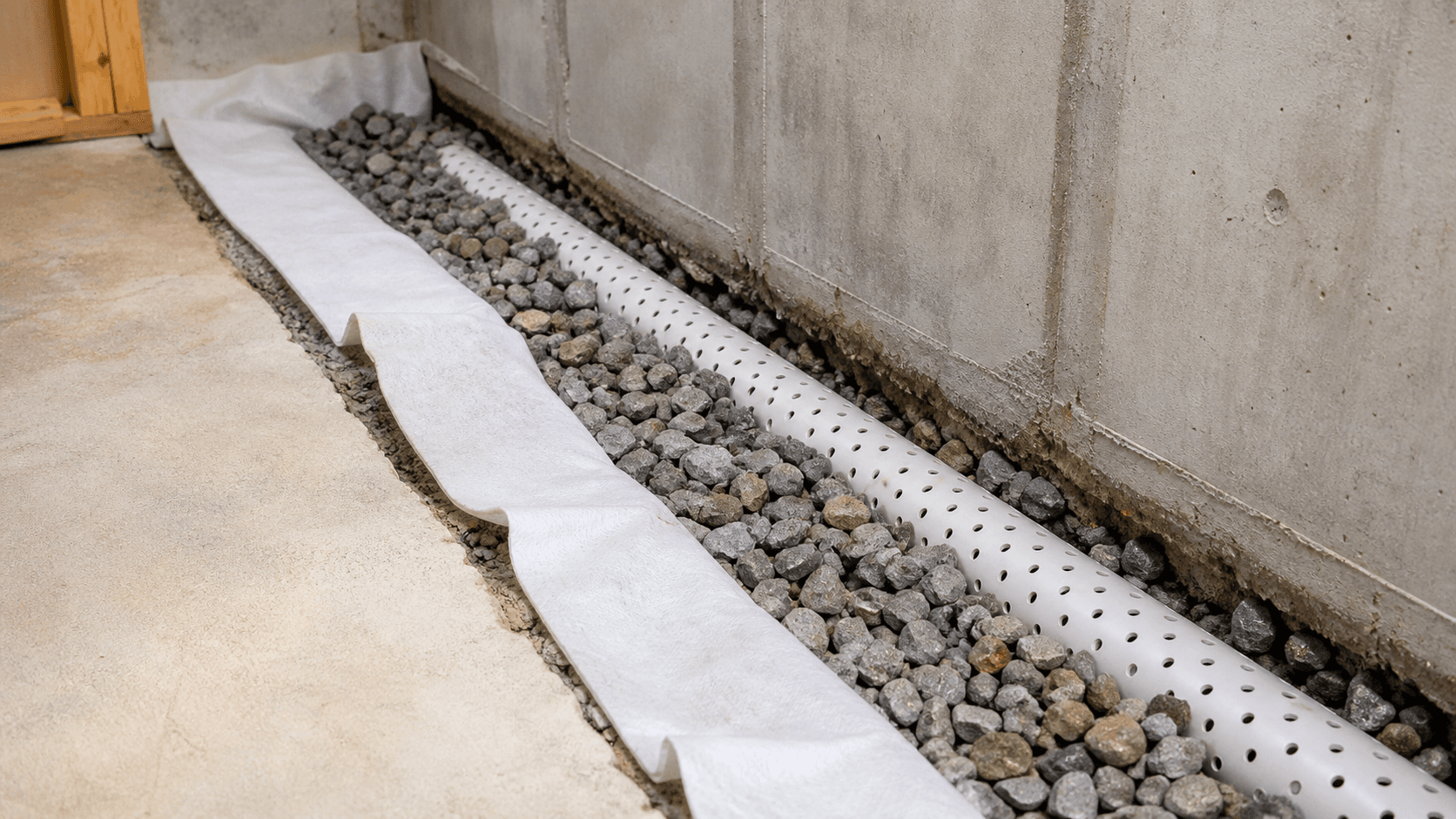
French drain pipe and gravel used to collect basement water
A French drain creates the collection path; a sump pump provides powered discharge when gravity drainage is not enough.

Side-by-side

Sump pump compared with French drain

FactorSump pumpFrench drainBottom line

Main job

Actively pumps water from a sump basin to a discharge location.

Passively collects water through pipe, gravel, channel, or trench and moves it toward an outlet or basin.

Pump equals removal; drain equals collection.

Power need

Needs electricity and may need battery or water-powered backup.

May work by gravity, but interior drains often feed a powered sump pump.

Power reliability matters when pumping is required.

Best fit

Existing sump basin, pump failure, collected water, and basement systems that need powered discharge.

Perimeter seepage, wall-floor joint water, exterior pooling, footing water, and drainage collection needs.

Choose based on whether water is collected yet.

Failure point

Float switch, motor, power loss, check valve, clogged discharge, or undersized basin.

Poor slope, sediment, crushed pipe, bad outlet, missing fabric, or water sent to the wrong place.

Both systems need maintenance and a clear design.

Cost pattern

Lower for pump replacement; higher for new basin, backup, discharge, and electrical work.

Driven by length, depth, interior concrete work, exterior excavation, materials, sump connection, and restoration.

A drain-plus-pump quote should itemize each part.

Decision framework

Use the water path to make the choice

A good comparison starts by naming the water path. Water that begins at a wall crack, water that appears at the wall-floor joint, water that comes through the floor, and water that pools beside the foundation can all point to different solutions. The visible puddle is the end of the story, not the beginning.

Compare methods by what they actually do. Some methods block a narrow path. Some reduce water outside the foundation. Some collect water at the perimeter. Some pump collected water away. Some control humidity after the water source is reduced. A method can be excellent at one job and poor at another.

Disruption matters, but diagnosis should lead the decision. A less disruptive method is attractive when it matches the problem. A more disruptive method may be justified when exterior access, failed footing drains, wall-side water pressure, or source-side repair are truly part of the scope. The estimate should explain why the disruption is necessary.

The quote should connect method, limit, and next step. If a contractor recommends a drain, ask where it collects water and where it discharges. If they recommend a pump, ask how water reaches the basin. If they recommend exterior work, ask what will be excavated and restored. If they recommend paint, ask what pressure or active seepage it is expected to handle.

Inspection clues

What should be checked before choosing a method

The inspection should begin inside the basement during or soon after a rain event if possible. The first wet point, stain line, crack path, odor location, sump basin behavior, wall-floor joint condition, and floor low spots all help separate a water-entry problem from humidity, plumbing, or appliance issues. Photos taken before cleanup are often more useful than a dry basement described from memory.

The exterior walkaround matters just as much. Short downspouts, clogged gutters, low soil beside the wall, mulch piled against siding, settled patios, window wells, driveway edges, and discharge lines that empty near the foundation can all change the comparison. A method chosen without reviewing the outside of the same wall is often a guess dressed up as a recommendation.

Finished basements need a different level of caution. Drywall, insulation, flooring, trim, paneling, cabinets, and stored belongings can hide the first wet point and raise the cost of correction. Before comparing methods, ask whether exploratory removal is needed and whether the waterproofing quote includes any restoration or only the repair system itself.

If the contractor uses a moisture meter, camera, level, sump test, hose test, or exterior grade check, ask how the finding changed the recommendation. The tool is useful only when it connects evidence to the repair method. A clear explanation is more valuable than a long list of equipment used during the visit.

Cost and warranty

Compare the risk, not only the price

Cost comparisons should separate initial installation from failure risk. Waterproof paint may have a low material cost, but it can become expensive if active seepage returns after walls or flooring are finished. Exterior excavation may cost more upfront, but it may be justified when the outside wall truly needs repair. Interior drainage may be a middle path, but it depends on pump reliability and discharge design.

Warranty language can make two estimates sound similar when they are not. Look for exclusions around hydrostatic pressure, power loss, pump failure, clogged discharge lines, structural movement, exterior drainage, finished-material damage, mold cleanup, and maintenance. The method matters, but the warranty tells you what the contractor is actually willing to stand behind.

Ask whether the quote is modular. A homeowner may be able to complete exterior drainage corrections first, monitor the next few storms, and then decide whether interior work is still needed. In other cases, delaying a drain or pump could risk a finished basement. The estimate should explain whether staging the work is reasonable or risky for that specific home.

The best comparison pages and estimates do not pretend the cheapest option is always wrong or the most expensive option is always best. They show what each method can do, what it cannot do, what evidence supports it, and what should happen if water returns after the first repair.

Choose by fit

When each option is more likely to fit

Choose Sump pump when...

Water already reaches a basin

If the basin fills during rain and the pump fails, runs constantly, or cannot keep up, the pump system deserves priority.

The home lacks gravity discharge

Many basements sit too low for simple gravity drainage. A sump pump is needed to lift water out and send it to a safe discharge point.

Power outage risk is the concern

When the pump works until storms knock out power, backup pump planning may be more urgent than adding more drain length.

The issue is pump reliability

Short-cycling, float problems, missing check valves, poor discharge, and old pumps are pump-system issues before they are drainage issues.

Choose French drain when...

Water appears away from the basin

A pump cannot remove water that spreads across the floor without reaching the pit. A drain may be needed to collect water from the perimeter or problem area.

The wall-floor joint leaks

Interior French drains or perimeter drains are commonly discussed when water enters along basement edges.

Exterior water pools near the foundation

A yard, curtain, or exterior foundation drain may reduce water load before it reaches the basement, depending on slope and discharge.

The basement needs a collection path

If water pressure is widespread, the drain gives water a controlled path instead of letting it find cracks, joints, and low spots.

Combined systems

When the answer may be both

Use both when an interior perimeter drain collects water and routes it to a sump basin for powered discharge.
Use both when exterior conditions create water load and gravity drainage is not practical for the whole system.
Use both when the basement is finished or high-risk and the cost of one failure would be high.
Ask whether the pump is sized for the drain system, whether backup power is included, and where the discharge ends.

Estimate review

Mistakes and questions before approving work

Mistakes to avoid

  • Installing a sump pump without a drain when water enters far from the basin.
  • Installing a drain without a reliable outlet or sump pump connection.
  • Discharging pumped water beside the same foundation wall.
  • Ignoring battery backup, alarms, and float-switch reliability in a storm-prone basement.
  • Comparing a pump-only estimate against a drain-and-pump estimate as though they solve the same problem.

Questions to ask

  • Is the problem water collection, water discharge, or both?
  • How does water reach the sump basin?
  • Where does the French drain start, where does it end, and how many linear feet are included?
  • Will water move by gravity, by pump, or by a combination?
  • What pump, check valve, alarm, backup, discharge route, and maintenance steps are included?
  • What happens if the pump loses power or the discharge line clogs?

Local notes

Raleigh, Durham, and Fayetteville considerations

Raleigh homeowners should ask how any recommendation handles drainage around the actual lot, not just the basement room. Gutter discharge, grading, patios, finished walls, sump discharge, permits, and electrical work can change which option is practical.

Durham pages should eventually add researched neighborhood and housing-context detail. For now, Durham homeowners should compare recommendations by access, basement finish level, exterior slope, and whether the contractor has explained discharge rather than only naming a product.

Fayetteville homeowners should pay special attention to storm performance. When repeated rain or power loss is part of the history, pump backup, alarms, discharge routing, and cleanup exclusions deserve more weight in the decision.

North Carolina projects can involve local permit, inspection, electrical, plumbing, and contractor-licensing questions depending on scope. Ask who is responsible for checking requirements before work begins.

When comparing local estimates, ask each contractor to describe the same storm scenario. A useful answer should explain how water is collected, where it moves, what happens during a power outage, what surfaces are disturbed, and what the homeowner must maintain after installation.

Related guides

Useful pages before comparing estimates

FAQs

Common comparison questions

Is a sump pump better than a French drain?

No. They do different jobs. A French drain collects water; a sump pump removes collected water. Many wet basements need both.

Can a French drain work without a sump pump?

Sometimes, if gravity can carry water to a safe outlet. Interior basement drains often need a sump pump because the water must be lifted out.

Can a sump pump work without a French drain?

Yes, if water naturally reaches the basin. If water enters around the perimeter or far from the basin, a pump alone may not collect it.

Which costs more, a sump pump or a French drain?

Pump replacement is usually less expensive than a drain system, but a new basin, backup pump, electrical work, discharge routing, and drainage connections can raise the cost. Drain cost depends on length, depth, location, and restoration.

Sources

References used for this guide

This guide combines current waterproofing comparison references with public moisture-control and local-permit resources. A site inspection is still needed before choosing a repair method.