Wet Basement Fixes

Drainage cost guide

French Drain Installation Cost

French drain cost depends on where the drain sits, how deep it must go, what it connects to, and where the water can discharge without cycling back to the foundation.

How to use this page

  • Start with the symptom or decision closest to your situation.
  • Compare repair options before choosing a contractor quote.
  • Check cost assumptions, safety boundaries, and related guides.
  • Request an inspection when water, odor, humidity, insulation, or wood concerns are active.

Quick answer

What homeowners should budget first

French drain installation can cost from several hundred dollars for a small shallow exterior drainage run to $18,000 or more for large or interior basement drainage projects. Current 2026 cost guides commonly show broad ranges because drain location changes the labor: yard drains, exterior foundation drains, deep drains, and interior basement drains are priced very differently.

For planning, exterior yard or foundation drainage may range from roughly $10 to $50 per linear foot in many published guides, while interior basement drains are often higher because the work can involve concrete removal, stone, pipe or channel, sump connection, dust control, and floor restoration. Angi's 2026 French drain guide lists broad professional ranges up to $27,000 depending on type and location, with interior drains commonly at the higher end.

The drain itself is not the whole price. Discharge route, sump pump, basin, concrete work, landscaping repair, utility conflicts, permits, slope, cleanouts, and whether the water is inside or outside the foundation all change the estimate.

Last reviewed: August 2, 2026
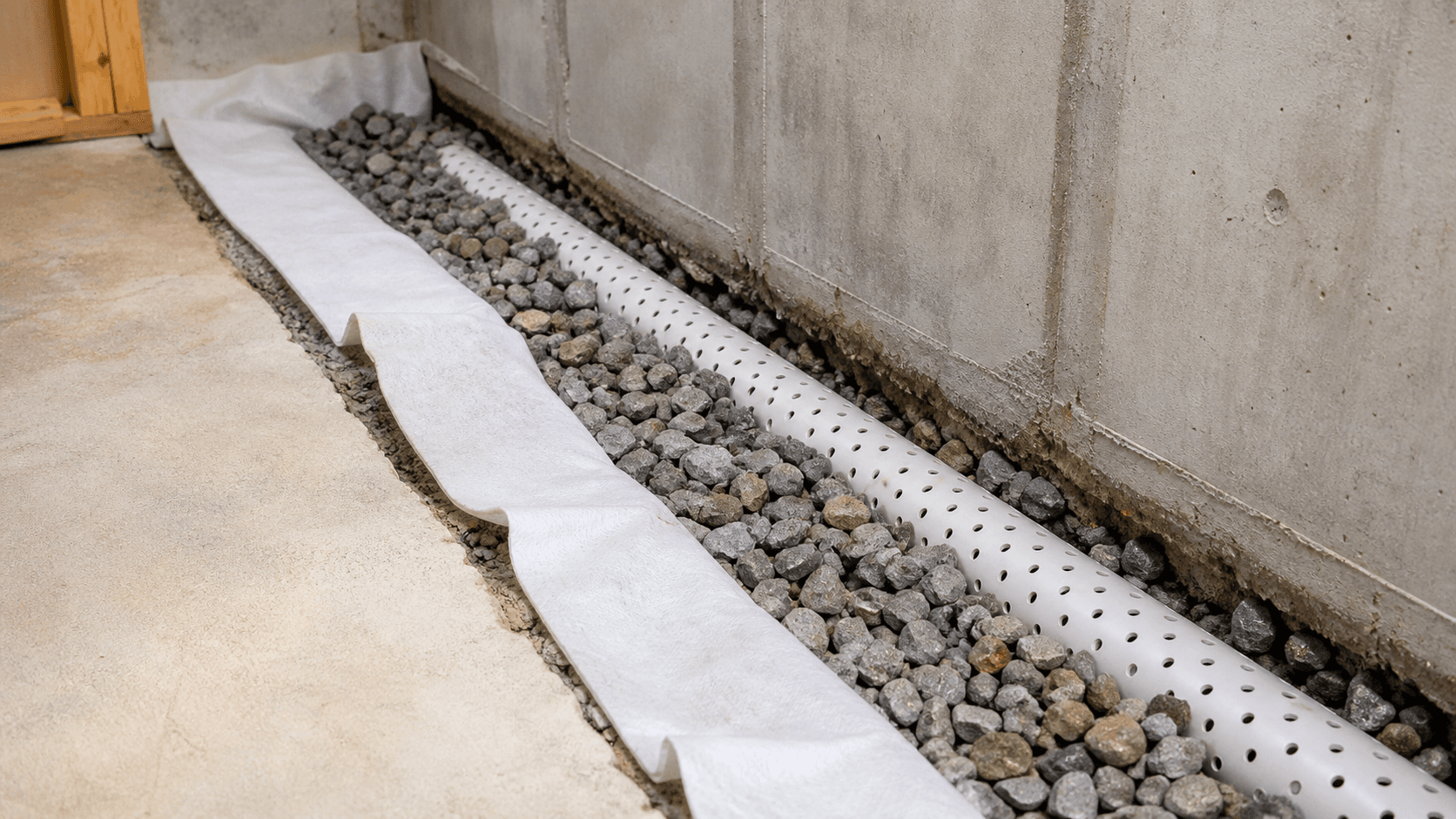
Perforated French drain pipe in gravel beside a basement foundation wall
Interior basement drains, exterior footing drains, and yard drains can all be called French drains, but they do not carry the same price or purpose.

Cost ranges

Typical price bands by scope

ScopePlanning rangeOften includesConfirm before approving

Small yard or curtain drain

$500-$5,000
Shallower exterior trenching used to intercept surface water or improve yard drainage near the foundation.
This may not solve groundwater pressure under a basement slab or water already entering the perimeter.

Exterior French drain near foundation

$2,000-$10,000+
Exterior trenching, pipe, gravel, fabric, slope or discharge, and landscape repair depending on length and access.
Depth, utilities, patios, decks, and discharge location can raise cost.

Interior basement French drain

$5,000-$18,000+
Concrete opening, interior perimeter drainage, stone or channel, sump connection, dust control, and floor patching.
Finished walls, stairs, utilities, full perimeter coverage, and backup sump systems can add cost.

French drain plus sump system

$6,000-$20,000+
Drain collection path, sump basin, pump, check valve, discharge line, and restoration.
Pump quality, backup, alarm, electrical work, and discharge route should be itemized.

How to use the numbers

Read the estimate before reading the total

Published cost ranges are useful for planning, but they are not a substitute for a basement-specific estimate. Waterproofing prices change because the same symptom can come from very different sources. A small vertical crack, a failed sump pump, perimeter seepage, and exterior footing-drain failure can all leave water on the same floor, yet the scopes are completely different.

Use the numbers on this page as a quote-reading framework. The goal is to understand what belongs in the scope, what could reasonably raise the price, and which exclusions need to be clarified before work starts. A lower quote can be the better quote when the diagnosis is narrow and correct. A higher quote can be the better quote when it includes drainage, discharge, restoration, backup protection, and the pieces that another estimate left out.

The most reliable cost conversation starts with the first wet point, not the final puddle. If water begins at a wall crack, the price should be tied to crack access, crack stability, and exterior water conditions. If water begins around the perimeter, the price should be tied to drain length, sump capacity, concrete work, and discharge. If water begins outside, the price should account for excavation, utilities, soil, landscaping, hardscape, and where collected water will go.

Every cost range here assumes normal residential conditions and professional installation. It does not promise that a specific contractor in Raleigh, Durham, Fayetteville, or another market will use the same numbers. Local labor, backlog, travel, storm seasons, material choices, access, permit requirements, and warranty terms can all change the final estimate. The most useful next step is usually not asking for one price; it is asking why each line item exists.

Project scenarios

Why one home can cost far more than another

Lower to moderate budget

Surface water near the foundation

If the issue is roof water or yard water pooling near the wall, an exterior drain, downspout extension, grading correction, or shallow curtain drain may be considered. The estimate should explain whether it prevents water from reaching the foundation or merely redirects visible surface water.

Interior system budget

Water at the basement perimeter

When water appears at the wall-floor joint, a French drain quote often means an interior perimeter drain. The cost should include length, concrete removal, drain material, sump basin connection, wall drainage detail, floor restoration, and how the system will be maintained.

Excavation budget

Failed exterior footing drain

A failed footing drain can require exterior excavation near the foundation. The price depends on depth, access, utility location, wall preparation, pipe replacement, gravel, fabric, discharge, backfill, and restoration. This is rarely comparable to a shallow yard drain quote.

Pump-connected budget

Drain cannot discharge by gravity

If the property lacks enough slope for gravity discharge, the French drain may need a sump basin and pump. That adds pump cost, electrical considerations, backup planning, alarms, and discharge routing to the drain estimate.

Cost drivers

What changes the final price

Interior, exterior, or yard location

The phrase French drain is used loosely. Interior basement drains usually cost more because they involve concrete and sump connections. Exterior foundation drains involve excavation. Yard drains can be shallower but still depend on length, slope, soil, and restoration.

Depth and access

A shallow landscape trench is not the same as digging to the footing. Deeper work requires more labor, safety planning, soil handling, utility awareness, and surface restoration. Tight lots, patios, decks, HVAC equipment, and mature landscaping can all raise cost.

Linear feet

Drain projects are often estimated by length. A 30-foot problem wall costs less than a full perimeter system, but a partial drain should match the water pattern. Ask why the proposed start and end points were chosen.

Materials and clog protection

Pipe type, pipe diameter, gravel volume, fabric, channel style, cleanouts, basin connection, and sediment protection affect both price and performance. Cheap material choices can be expensive later if the drain clogs or collapses.

Sump and discharge

Every drain needs a destination. Gravity discharge may be possible outside, but many interior drains need a sump pump. Discharge length, termination point, freeze risk, erosion control, and whether water could return to the foundation all matter.

Restoration and cleanup

Interior drains require concrete patching and may require finished-wall removal. Exterior drains may require lawn, shrub, mulch, walkway, patio, or driveway restoration. These items should be named rather than assumed.

Quote review

Details that should be written into the estimate

Line items to ask for

  • Whether the drain is interior, exterior footing, exterior yard, curtain, deep, or another type.
  • Measured linear feet, trench depth, pipe or channel type, gravel, fabric, cleanouts, and slope assumptions.
  • Where water enters the drain and where it exits the system.
  • Whether the drain connects to a sump basin, existing pump, new pump, or gravity discharge point.
  • Concrete removal, dust control, floor patching, landscaping repair, hardscape repair, and utility protection.
  • Permit, inspection, and discharge responsibilities when local rules or trade work apply.

Common exclusions

  • A yard drain may not fix water already entering through the basement floor or wall-floor joint. The estimate should match the water path.
  • A French drain does not repair structural wall movement, sewer backup, plumbing leaks, or a failed sump pump unless those items are included separately.
  • Discharge problems are often excluded or vague. If water leaves the drain and returns to the same foundation wall, the project can fail even when the trench was installed correctly.
  • Restoration may be limited. Interior patching, finished flooring, landscaping, irrigation, patios, and walkways need clear written scope.

Comparison checklist

How to compare two very different bids

Ask whether the quote is solving a water source, managing water after it enters, or doing both. Exterior waterproofing and grading reduce water before it reaches the wall. Interior drains and sump pumps manage water that reaches the basement. Crack injection seals a specific path. These can all be valid, but they are not interchangeable.

Confirm the measured scope. For drainage work, ask for linear feet, affected walls, trench depth, pipe or channel type, basin location, pump details, discharge route, and concrete restoration. For exterior work, ask for excavation length and depth, membrane or coating product, drainage board, footing-drain details, backfill, utility protection, and surface restoration.

Separate waterproofing from cleanup and finishing. Wet carpet removal, drywall replacement, mold remediation, electrical repairs, framing, insulation, flooring, painting, landscaping, patio replacement, and storage protection may sit outside the waterproofing estimate. If the basement is finished, the exclusions can be as important as the main waterproofing price.

Look for risk planning. A sump pump quote should address power loss, alarms, discharge freezing or clogging, check valves, basin covers, and maintenance access. A drainage quote should address where water leaves the property and whether the discharge could recycle back to the foundation. A crack quote should explain what happens if nearby pressure opens a new leak path.

Do not compare warranties by length alone. A warranty that excludes hydrostatic pressure, finished-material damage, sump failure, discharge blockage, exterior drainage, or structural movement may be much narrower than it sounds. Ask what evidence is required for a warranty claim and whether routine maintenance affects coverage.

Local notes

Raleigh, Durham, and Fayetteville cost considerations

Raleigh is the primary launch market for quote guidance. Many projects still follow national pricing logic, but Raleigh homeowners need to check whether permits, inspections, electrical work, plumbing changes, or site drainage rules apply to the actual scope. The City of Raleigh notes that many residential construction and improvement projects require permits even when drawings are not always required.

Durham should not be handled as a copied Raleigh page later. Older neighborhoods, additions, lot grading, finished basement use, access limits, and county or municipal permitting can change the estimate conversation. Until the city page is fully researched, Durham references on cost pages should stay practical and cautious: ask what is disturbed, who handles permit questions, and where discharge is allowed to go.

Fayetteville cost conversations should pay special attention to storm readiness and pump reliability. That does not mean every Fayetteville home needs the same system. It means sump capacity, backup power, alarms, discharge routing, and cleanup exclusions should be made explicit when the home has repeated storm-related water or a finished basement at risk.

For larger North Carolina projects, contractor licensing can matter. The North Carolina Licensing Board for General Contractors states that a general contractor license is required when a project is valued at $40,000 or more. Smaller waterproofing scopes may still involve plumbing, electrical, excavation, or local permit considerations, so homeowners should ask who is responsible for compliance before approving work.

Budget control

Where homeowners can avoid wasted spending

Clarify the type before comparing price. A lower yard-drain quote and a higher interior-basement-drain quote may both be reasonable because they are solving different problems.
Fix roof-water basics first when appropriate. Downspouts and gutters that dump water beside the wall can overwhelm a drain and make a bigger system seem necessary.
Ask for a discharge drawing. It does not need to be fancy; it just needs to show where collected water goes and why it will not return to the foundation.
Protect the drain from sediment. Fabric, stone, pipe, cleanouts, and slope details are not cosmetic. They affect whether the system keeps working after the first few storms.

Next steps

Useful pages before requesting a quote

FAQs

Common cost questions

How much does a French drain cost?

Costs vary widely. Small exterior drains can cost a few thousand dollars or less, while interior basement drains and larger systems can reach $5,000 to $18,000 or more. Location, depth, length, sump needs, and restoration drive the estimate.

Why is an interior French drain more expensive?

Interior basement drains often require concrete removal, drain installation, sump connection, dust control, and floor patching. Finished walls and utilities can add more cost.

Does a French drain need a sump pump?

Interior basement drains often do. Exterior drains may discharge by gravity if the property has enough slope and a safe discharge point.

Can a French drain solve water after rain?

It can help when the problem is drainage and water collection. It will not solve every rain-related problem, especially plumbing leaks, sewer backup, structural movement, or discharge that sends water back toward the foundation.

Sources

Cost data and local references

Cost ranges were reviewed against current national cost guides and local permitting or licensing references. Treat them as planning ranges until a contractor inspects the basement, confirms the water source, and writes a scope.